Belleair, Florida Market Report — Q1 2026: The Data Behind One of the Gulf Coast’s Most Exclusive Addresses
Every once in a while, a real estate market presents itself with numbers that don’t need a sales pitch — they just need honest context. Belleair, Florida is one of those markets. A small, refined enclave tucked along the Intracoastal Waterway in Pinellas County, Belleair occupies barely two square miles and about 4,000 residents. In terms of wealth concentration, education levels, and community character, it competes with places far larger and considerably louder.
That context, in 2026, includes two back-to-back hurricanes that fundamentally reshaped the real estate landscape across Pinellas County. Hurricanes Helene (September 26, 2024) and Milton (October 9, 2024) struck just 13 days apart, and their combined impact on property values, inventory levels, insurance costs, and seller motivations is not background noise — it is the story behind the current market data. Readers who want to understand why the numbers look the way they do need to understand what happened.
This post walks through the Belleair market data, the demographic and economic profile, and the post-hurricane conditions shaping what’s for sale and why.
A Town Built With Intention
Most Florida towns grew up fast and somewhat accidentally. Belleair was designed. In 1925, the town commissioned acclaimed urban planner John Nolen — the same man who helped lay out Madison, Wisconsin — to design its street grid. The result is a community that feels organized and livable in ways that many Florida subdivisions, built hastily during boom cycles, simply do not.
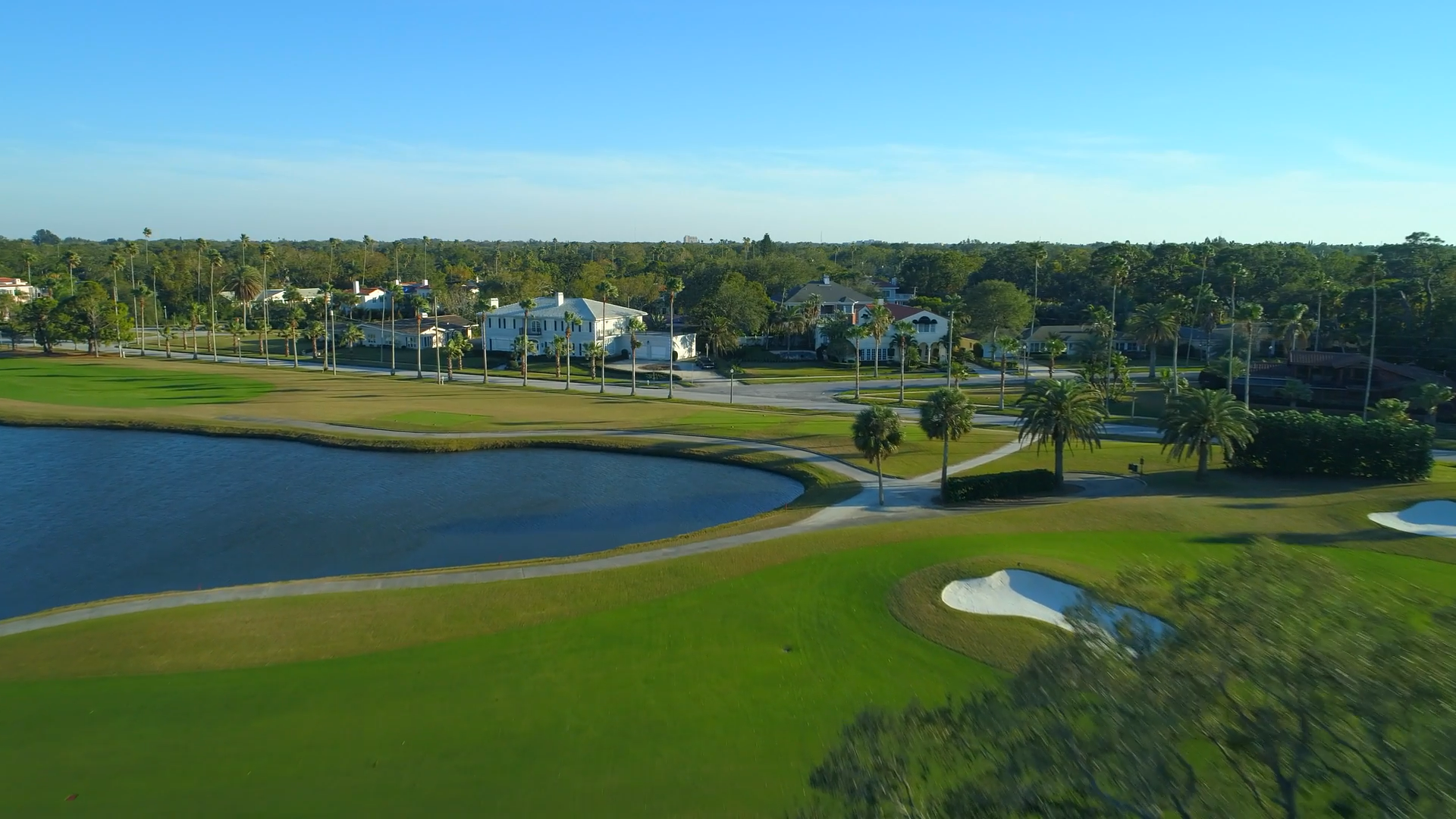
The town’s roots trace to the Belleview Hotel, which opened in January 1897 and served as a premier winter destination for the nation’s affluent. Its golf course — started with six holes by Henry B. Plant in 1897 and expanded into two 18-hole layouts by legendary designer Donald J. Ross in 1915 — holds the distinction of being the first golf course in Florida. That’s not a marketing footnote. It’s historical context that shapes what Belleair is: a place where serious wealth arrived early and decided to stay.
The Belleair Country Club today remains the town’s social and recreational anchor, offering golf, tennis, pickleball, croquet, a 10,000-square-foot fitness facility, and dining — the kind of club where memberships travel between generations. You don’t need to be a member to live in Belleair, but it helps to appreciate what the town is built around.
Hurricanes Helene and Milton: What Actually Happened Here
Before diving into the housing numbers, this section deserves its own space. Any market analysis of Pinellas County real estate in 2025 or 2026 that skips past Helene and Milton isn’t doing you any favors.
Hurricane Helene made landfall on Florida’s Big Bend coast as a Category 4 storm on September 26, 2024. According to University of South Florida researchers, it was the strongest storm to impact Pinellas County’s coast in 80 years. Storm surge along coastal Pinellas reached 4 to 7 feet above mean higher high water, topping previous records at Clearwater Beach and St. Pete Beach by more than two feet. Twelve people died in Pinellas County — most in their own homes, from storm surge. More than 500 water rescues were conducted by first responders.
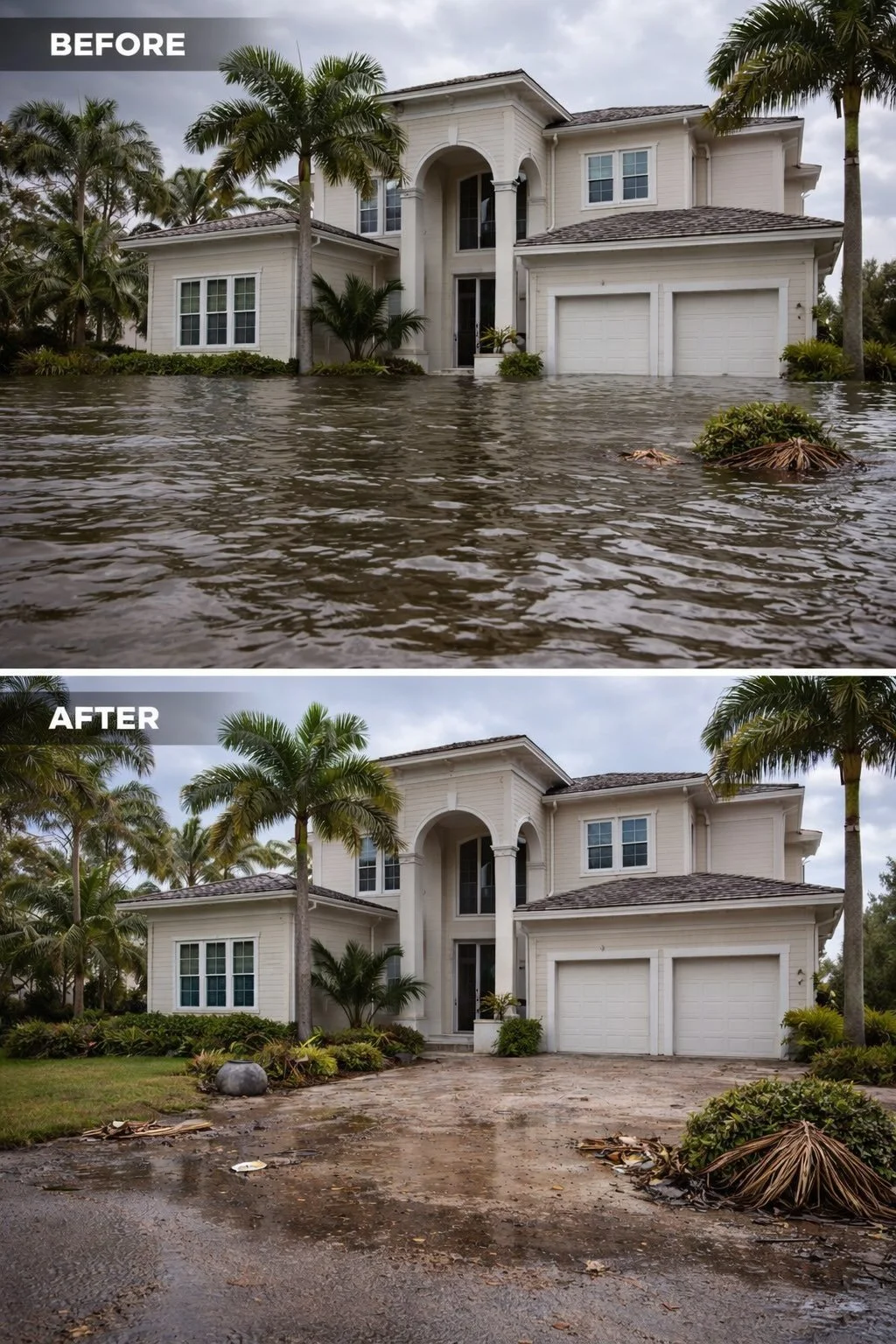
Belleair was directly in the impact zone. The town’s “finger” neighborhoods — narrow streets lined with homes sitting on the Intracoastal Waterway — were among the hardest-hit areas in the community. Residents described flooding unlike anything seen in over 100 years in Pinellas County. One Belleair homeowner reported floodwater crashing more than three feet high against his back door. Interiors were gutted: furniture, appliances, vehicles, boats — complete losses requiring full interior overhauls at minimum.
Then, just 13 days later, Hurricane Milton made landfall as a Category 3 storm on October 9, 2024, striking areas already waterlogged and structurally compromised from Helene. Belleair Beach reported flooding and downed trees from Milton, though the surge was less severe than Helene’s. The back-to-back timing left little opportunity for any meaningful recovery between storms.
By the numbers: Across Pinellas County, the two storms damaged 40,910 homes and destroyed more than 700. Helene alone generated more than 22,000 NFIP (National Flood Insurance Program) flood insurance claims in Pinellas County. FEMA distributed nearly $107 million directly to Pinellas County residents. Statewide, the two storms led to more than 78,000 insurance claims with estimated losses potentially topping $10 billion — driving the NFIP’s loss ratio above 200% for calendar year 2024.
The regulatory aftermath added another layer of complexity. FEMA’s “50% rule” — a federal guideline applied to properties in flood zones — requires that if repair costs exceed 50% of a structure’s pre-disaster market value, the home must be elevated, relocated, or demolished to current flood-resistant standards. In unincorporated Pinellas County alone, approximately 1,000 homes received “substantial damage” determinations following the storms. Demolition permits ran at roughly four times the normal rate. Compliance deadlines have been extended to June 1, 2026 — meaning this process is still actively unfolding.
For homeowners who couldn’t afford to rebuild or elevate to code, the path of least resistance was to sell — often at a significant discount. That dynamic is visible in the current transaction data, and it matters for interpreting what you’re seeing in the comps.
The Housing Market: Reading the Numbers in Context
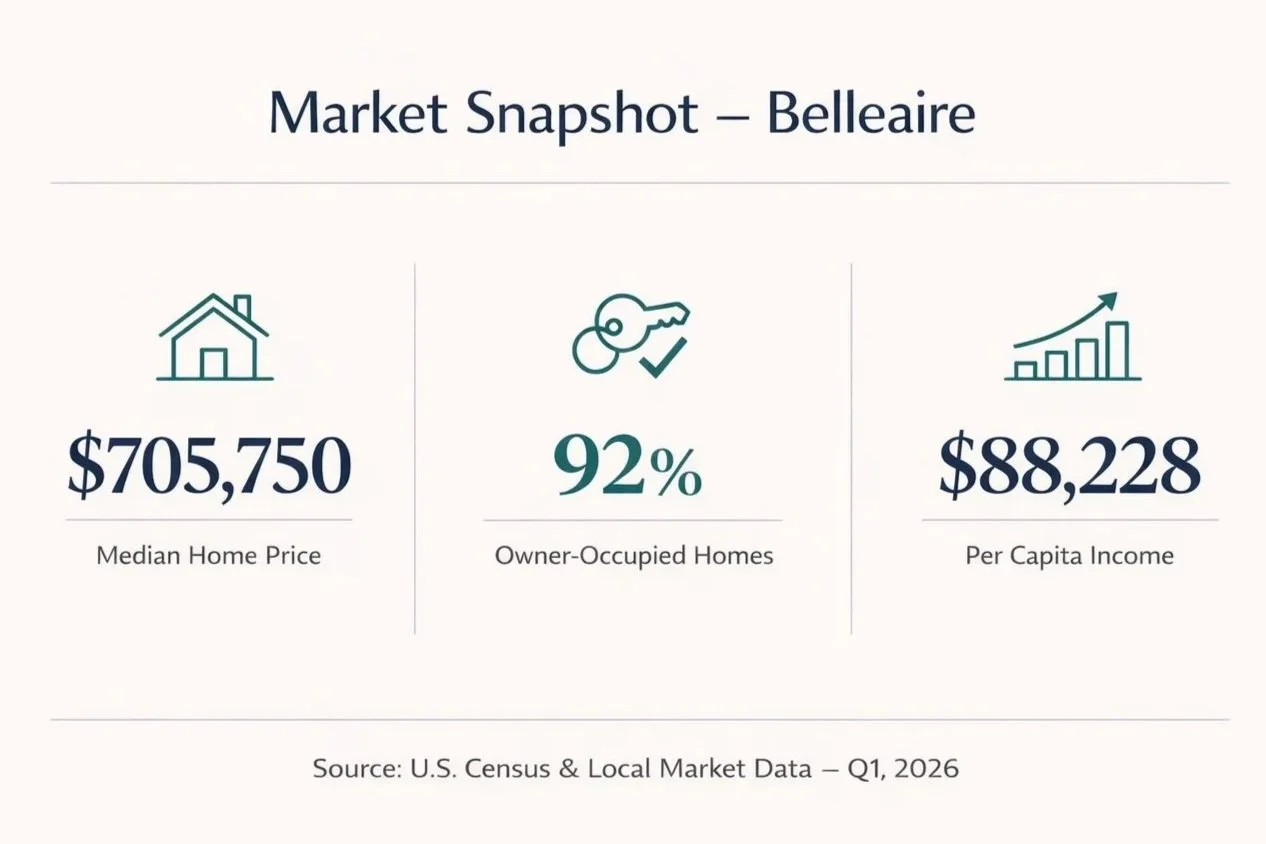
As of Q1 2026, the Belleair housing market is squarely in buyer’s territory, and the data makes this unusually clear. RPR (Realtors Property Resource) reports 8.11 months of inventory (up 9% month over month), with a median days on market of 48 and homes closing at approximately 93.9% of list price. A balanced market runs around 4–6 months of inventory. At 8.11, buyers have negotiating room that hasn’t existed here in years.
The median estimated property value sits at approximately $705,750 — roughly 76% above the Pinellas County median of $402,000, nearly double the Florida statewide median of $392,000, and nearly double the national median of $368,000. The median sold price in February 2026 was $850,000, meaning actual closed transactions are skewing above the estimated median — a pattern typical of low-turnover, high-end communities where only part of the market transacts in any given quarter.
List prices tell a two-speed story: up 16.8% year-over-year, while the underlying estimated home value is down 11.3% over the same 12-month period. Sellers have been pricing optimistically; the valuation model reflects softer fundamentals. That gap tends to resolve through negotiation, and in this buyer’s market, patient buyers with current data have leverage.
The comp distribution reveals the full picture. Nine homes sold under $600,000 in the trailing three months — the largest single price bracket. Some portion of those are condos and smaller units transacting at market value. But some reflect storm-distressed properties: homes sold at or near land value after hurricane damage made full restoration cost-prohibitive, or homes where sellers chose exit over the expense of compliance with FEMA’s substantial-damage elevation requirements. Six properties transacted above $1.3 million, reflecting the active luxury tier. Both ends of the market are moving.
Fix-and-flip activity has increased measurably across Pinellas County post-storm. Investors acquiring distressed, damaged homes at land or near-land value, rebuilding to current elevation and flood-resistant standards, and relisting at market rates are a real presence in the data. If you see a recent sale that looks suspiciously low for the neighborhood, that’s often the explanation.
The median home age in Belleair is 51 years. This matters more than ever in a post-Helene market: older homes, particularly those in lower-elevation areas near the Intracoastal, may carry unresolved storm damage, deferred elevation compliance issues, or dramatically changed insurance conditions. Budget for a thorough inspection, verify flood zone designation and current insurance costs, and factor elevation certificate status into your analysis.
Who Calls Belleair Home
Belleair’s population of approximately 4,000 is small, stable, and distinctly mature. The median age is 59 — a full decade older than Pinellas County’s median of 49 and twenty years ahead of the national median of 39. This is predominantly a community of residents who have already built careers, raised children, and chosen deliberately where they want to be for the next chapter.
The adult age distribution is clear: the three largest cohorts are the 35–54 range (22.57%), the 65–74 range (21.96%), and the 75+ range (22.52%). Nearly two-thirds of the adult population is 55 or older. Household structure reflects this: 962 married couples without children, compared to 252 with children. The dominant pattern here is couples in their post-child-rearing years who chose to own rather than rent — and with a 92% homeownership rate (versus 65% nationally), Belleair is a community of deeply committed long-term residents.
Education levels are exceptional. Essentially no residents lack a high school diploma (0% below 9th grade, 0.69% with some high school). Bachelor’s degree holders represent 29.12% of the population versus 21.27% nationally. Graduate and professional degree holders account for 24.87% — nearly double Florida’s 12.48% and nearly double the national average of 13.73%. This is a highly educated, professionally credentialed community.
One demographic note worth raising in a post-hurricane context: the 75+ cohort represents 22.52% of Belleair’s adults — 848 individuals. For this group, the calculus of rebuilding a flood-damaged home is often very different from that of a 45-year-old. The proportion of Belleair’s sellers who chose to exit rather than rebuild after the storms likely skews older. That isn’t conjecture — it’s a demographic reality of this community’s profile.
The Economic Profile: Resilience Has a Dollar Figure
Belleair’s economic profile stands clearly above its neighbors. Per capita income of $88,228 is roughly double the Pinellas County average of $46,580 and more than double the national average of $43,289. Median household income is $117,500, compared to $70,293 for the county and $78,538 nationally. The largest single income bracket is households earning more than $150,000 per year — 742 households — the defining financial profile of this community.
That economic strength matters in a recovery context. Homeowners with the financial capacity to absorb a six-figure rebuild, elevate a structure to current FEMA standards, or fund significant storm remediation are more likely to do so and remain in place. The distressed-sale dynamic affecting parts of Pinellas County more acutely is somewhat buffered here by the community’s above-average wealth. That said, even affluent owners face limits when insurance becomes unavailable or unaffordable — and that is now a real variable across coastal Florida.
Insurance context: Helene and Milton drove the NFIP’s national loss ratio above 200% for 2024. Flood insurance premiums and availability are under meaningful pressure across coastal Pinellas County. Before purchasing any property in a flood zone in this market, get current insurance quotes from multiple carriers — not estimates, not assumptions. Actual quotes. The number may surprise you.
The top occupational categories in Belleair are Healthcare and Social Assistance (371 workers), Finance and Insurance (219), and Professional, Scientific and Technical fields (191). The workforce is predominantly white-collar and professionally concentrated. Pinellas County’s unemployment rate sits at 4.1%, below both the state (4.2%) and national (4.4%) averages. The regional economy is stable.
Quality of Life: The Advantages, Including the Honest Ones
Average January temperatures range from 55°F to 75°F. Average July highs reach 95°F, with lows around 70°F. Annual rainfall is approximately 60 inches, concentrated in the summer rainy season. Annual snowfall: zero. For those relocating from northern states, this still bears repeating: zero is not a rounding error. It is the actual number, every year, reliably.
The area records 98 days of full sun annually. Average commute to work is 20 minutes — below the county (25), state (28), and national (27) averages. A full 38% of residents reach work in under 15 minutes; another 35.5% in 15–30 minutes. Approximately 339 residents work from home. Belleair has no Superfund sites. Its elevation of 19 feet sits slightly above the county average of 17 feet, which carries real-world relevance in a coastal state now closely scrutinizing flood risk, insurance zoning, and storm surge modeling.
That last point deserves candor. Elevation of 19 feet applies to Belleair’s higher ground. The “finger” neighborhoods extending toward the Intracoastal sit substantially lower, as the 2024 storms made graphically clear. Location within Belleair matters as much as the town’s averages. The difference between a home on higher ground and one in a finger neighborhood is not academic — it’s thousands of dollars per year in insurance and a material difference in flood exposure.
Geographically, Belleair is well-positioned without being congested: quick access to Gulf beaches via the barrier islands, proximity to Clearwater’s medical and commercial infrastructure, and approximately 30 minutes to Tampa International Airport. The Belleair Country Club, with its fitness center, dining, tennis, pickleball, and golf, continues to function as the community’s social center.
Context: How Belleair Compares to Its Neighbors
The communities immediately surrounding Belleair span a wide range, which helps clarify where Belleair sits in the regional hierarchy:
Belleair Bluffs ($429,800 median, 2,394 residents) is the more accessible entry point to the Belleair family of communities — inland, smaller, and less exclusive in character. Belleair Beach ($966,180 median, 1,506 residents) represents the barrier island premium: direct Gulf access with the price and flood exposure that come with it. The City of Belleair Beach is a barrier island community and absorbed significant direct storm impact from both Helene and Milton.
Belleair Shore, with a median estimated home value of $5,034,000, a total of 43 homes, and a population of 58 residents, is one of the most exclusive micro-communities in Florida. It makes Belleair look, comparatively, like a bargain — which, relative to its neighborhood context, it genuinely is. Indian Rocks Beach to the south shows a median of $878,780 and represents another relevant barrier island comparison point.
Belleair itself occupies a strategic middle position: more affordable than the beachfront communities, more prestigious than the inland ones. Situated on the mainland side of the Intracoastal rather than on the barrier islands, Belleair generally had less direct Gulf storm surge exposure than beachfront communities — though, as noted, its Intracoastal-adjacent finger neighborhoods were significantly impacted by Helene’s bayside surge. That distinction matters for property-by-property analysis.
What This Means for Relocators, Investors, and Current Owners
For those considering relocation, Belleair is a mature, well-established community with exceptional income demographics and a civic identity built around residential character and institutional stability. The current buyer’s market conditions offer meaningful leverage. Post-hurricane, the due diligence checklist is longer than it would have been in 2023: verify flood zone designation, confirm no unresolved substantial-damage determination, obtain current insurance quotes from multiple carriers before making an offer, and inspect specifically for storm-related remediation quality in any home built before 2020.
For investors, the combination of 8+ months of inventory, a 93.9% sold-to-list ratio, and storm-distressed properties entering the market at or near land value creates specific opportunities. The fix-and-flip dynamic is active in Pinellas County broadly, and Belleair’s price floor — even post-storm — remains substantially above the county median. Investors who understand the FEMA 50% rule, the elevation requirements, and the insurance cost structure will find better-informed decisions than those who are purely chasing low list prices. The 11.3% 12-month value decline warrants careful entry price analysis; the long-term demand fundamentals remain intact.
For current residents and owners: the market softening reflects both regional post-hurricane dynamics and broader Pinellas County trends, not a permanent recalibration of Belleair’s underlying value proposition. The community’s fundamentals — ownership rate, income profile, education levels, land constraints, and community character — remain among the strongest in the county. Sellers entering the market in 2026 should price with current data, understand that buyers are doing detailed hurricane-recovery due diligence, and be prepared to document any storm remediation work with permits and professional certifications. Transparent sellers move faster in this environment.
Final Thoughts
Belleair is not the kind of community that makes noise. More than 125 years of institutional character, a century-old country club, the first golf course in Florida, and some of the strongest demographic and income data in the region — these things tend to speak for themselves, quietly and persistently.
The 2024 hurricane season tested every community in Pinellas County, and Belleair was not exempt. The storm data is real, the recovery process is still active, and the market has absorbed it with the kind of recalibration you’d expect when 40,000 county homes sustain damage in a single fall season. What the data also shows is a community with the financial depth, ownership commitment, and long-term stability to work through it.
For those evaluating Florida’s Gulf Coast with a data-first mindset, Belleair belongs on the list. The reward for doing the homework is understanding both what the numbers mean and what caused them — which, in 2026, is precisely the kind of intelligence that separates informed decisions from expensive ones.
Data in this article is sourced from RPR (Realtors Property Resource), the National Association of REALTORS® member data platform, reflecting Q1 2026 market conditions; U.S. Census Bureau; Bureau of Labor Statistics; FEMA; and NOAA. Hurricane damage statistics are sourced from Pinellas County official reports and FEMA disaster declarations 4828-DR and 4834-DR. All figures are estimates and should be verified through current data and professional consultation.