
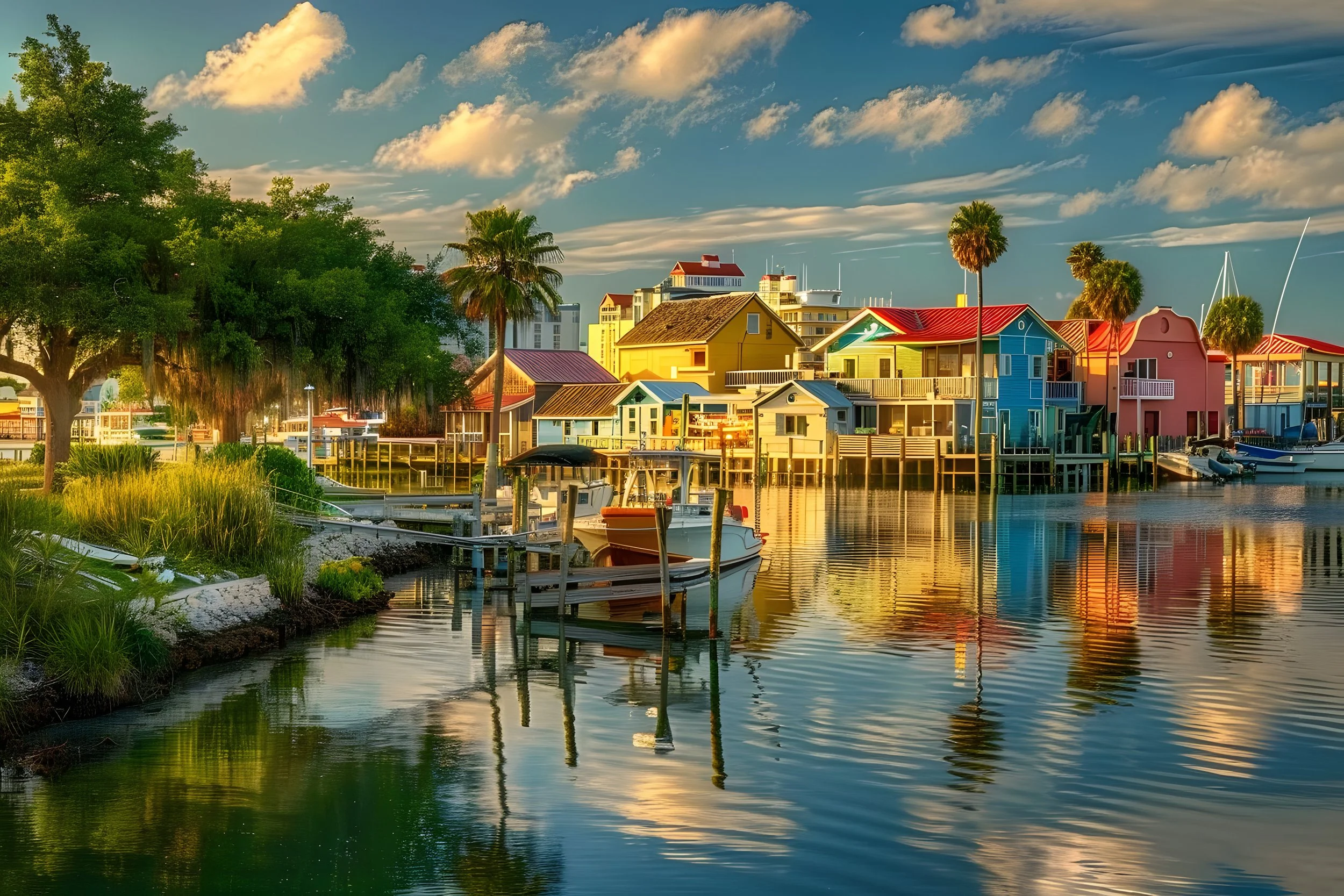
Madeira Beach, Florida
A working waterfront, a boardwalk, and a storm-carved pass that started it all.
AT A GLANCE
Location Pinellas County, FL — barrier island on the Gulf of Mexico, anchored by John’s Pass
Population Approx. 4,300 residents (U.S. Census)
Median Age ~52 years
Housing Mix ~62% owner-occupied / ~38% renter-occupied
Character Working waterfront community with active tourist and commercial corridor
Known For John's Pass Village & Boardwalk (Pinellas County's #1 tourist attraction); charter fishing fleet; Gulf and bay access
Nearest Cities Redington Beach (~5 minutes north); Treasure Island (~5 minutes south)
Nearest Airport St. Pete/Clearwater International (~20 minutes); Tampa International (~35 minutes)
Market Data See current Madeira Beach Market Report →
Most of the communities along the Pinellas barrier island chain trace their origins to the early twentieth century. Madeira Beach traces part of its character to 1848, when an unnamed hurricane carved a new channel through the barrier island and created what became known as John’s Pass. The pass — named for Jean "John" Levique, a turtle hunter and fisherman who worked these waters — became the geographic and economic anchor for everything that followed. Today, John’s Pass Village & Boardwalk is consistently ranked as Pinellas County’s top tourist attraction. That’s a long way from a hurricane and a turtle hunter, but the working waterfront character has persisted.
Madeira Beach incorporated in 1947 and has developed into one of the more commercially active communities on the Gulf barrier island chain. The roughly 4,300 residents live alongside a steady stream of visitors drawn to John’s Pass, the charter fishing fleet, and the Gulf beaches. The owner/renter split — approximately 62% owner-occupied — is lower than most neighboring communities, reflecting the more active short-term and seasonal rental market that a tourist-oriented commercial district tends to support.
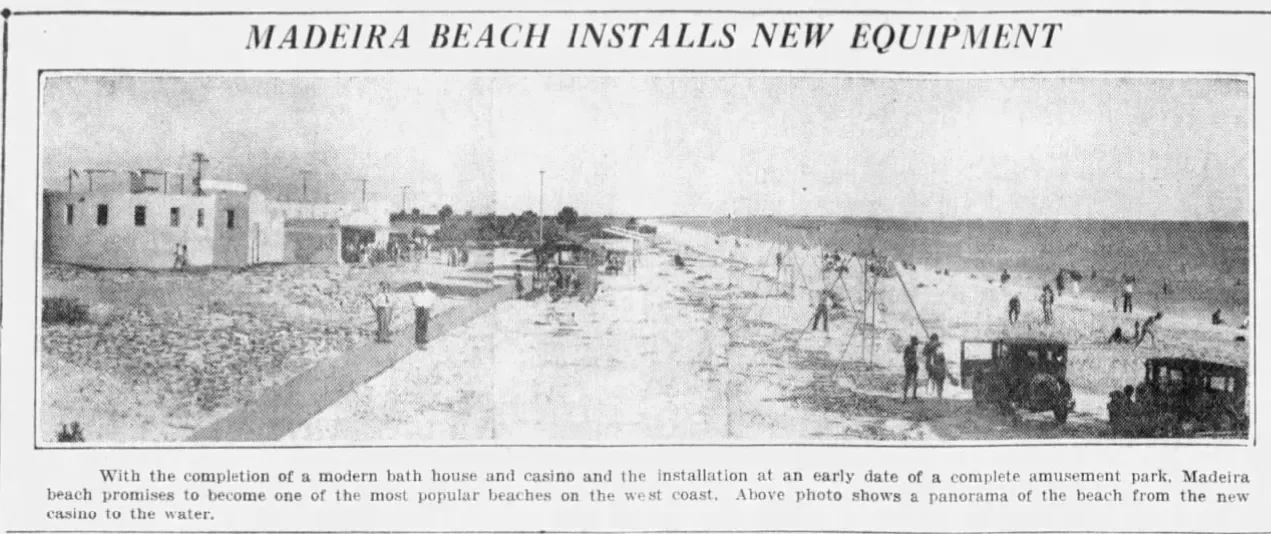
Born From a Storm, Built on a Waterfront
Before European contact, the Tocobaga people used the barrier islands in this area for seasonal fishing but maintained no permanent settlements. The arrival of the 1848 hurricane changed the physical geography significantly. The storm carved John’s Pass through the barrier island, creating a navigable connection between the Gulf of Mexico and Boca Ciega Bay to the east. For fishermen and commercial boat operators, the new pass was immediately valuable.
Jean "John" Levique had been working the waters in this area since the 1830s, hunting green sea turtles that were then a commercial food source. After the pass formed near his operations, it took on his name. Over the following decades, a small fishing community developed on the barrier island. Madeira Beach incorporated as a town in May 1947 and began growing in earnest during the postwar boom years as auto tourism made the Gulf Coast accessible to a broader public.
The modern John’s Pass Village was deliberately created. In 1980, local charter captain Wilson Hubbard proposed building a boardwalk along the public waterfront adjacent to his marina. The city agreed. Hubbard added shops over his marina in 1982 and 1983, and the commercial district grew from there into the multi-block boardwalk destination that exists today. The origin as a locally initiated project built on a working marina matters — the fishing fleet, the charter boats, and the commercial water activity at John’s Pass aren’t just decoration.
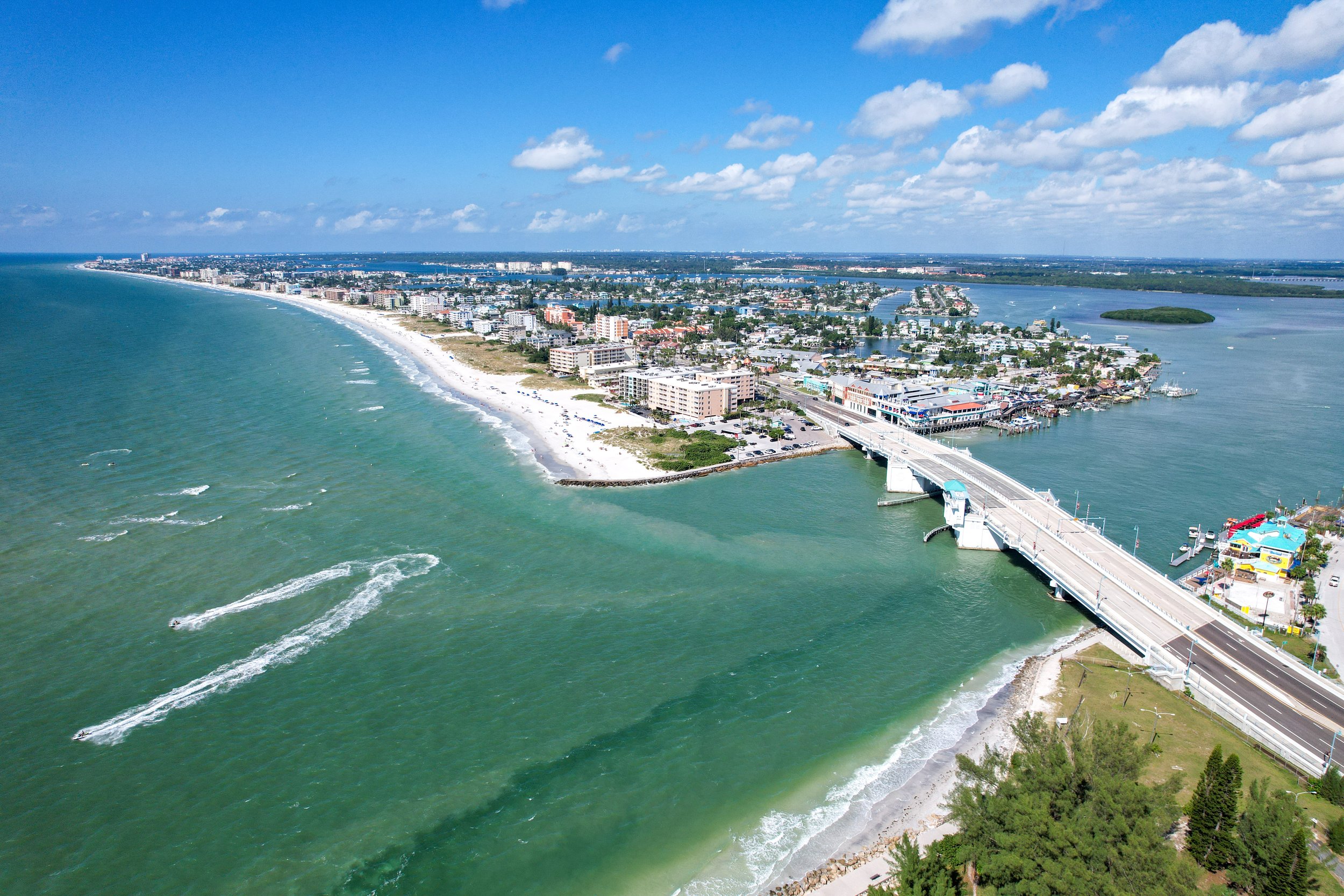
What Life Here Looks Like
John's Pass Village & Boardwalk anchors Madeira Beach's public identity. More than a hundred merchants occupy the village with retail shops, restaurants, and water activity operators — dolphin tours, boat rentals, parasailing, jet ski rentals, and the commercial fishing fleet. The boardwalk runs along the water's edge with views across to the Treasure Island side of the pass. It is genuinely lively, particularly on weekends, and if you are accustomed to the quieter pace of Indian Shores or Redington Beach, the contrast is significant.
For residents, the community offers a functional beach life with more commercial infrastructure than most barrier island neighbors. Gulf Boulevard connects north to the quieter communities and south to Treasure Island and St. Pete Beach. The residential neighborhoods behind the commercial corridors are a mix of long-term homeowners, seasonal buyers, and an active rental population. The median age of roughly 52 is younger than most neighboring communities, consistent with the more active, tourism-adjacent character of the town.
Geography & Location
Madeira Beach occupies a section of the Pinellas barrier island chain anchored by John’s Pass to the south, where the Gulf of Mexico connects to Boca Ciega Bay. Redington Beach is immediately to the north; Treasure Island is immediately to the south across the pass. Gulf Boulevard runs the length of the community. The Intracoastal Waterway forms the eastern boundary, with the mainland and commercial Pinellas County accessible via the Tom Stuart Causeway (CR 694). St. Pete/Clearwater International Airport is approximately 20 minutes east. Tampa International Airport is roughly 35 minutes via the Howard Frankland Bridge.
Flood Zone & Insurance: What to Know Before You Buy
Madeira Beach is a barrier island community at low elevation, and virtually all properties carry FEMA Special Flood Hazard Area (SFHA) exposure. Waterfront properties on the Gulf and canal-front lots on the Intracoastal side face the highest risk classifications. The commercial areas around John’s Pass sustained significant storm damage during Hurricanes Helene and Milton in 2024, which has implications for both insurance availability and the pace of property recovery in flood-affected areas. Flood insurance is required for federally backed mortgages in SFHA zones, and both NFIP and private market premiums have increased materially for barrier island properties in Pinellas County.
The current Madeira Beach Market Report addresses active post-hurricane conditions, recent substantial-damage determinations, and their effect on the local transaction landscape. If you’re evaluating a specific property, always obtain a current elevation certificate and at least two insurance quotes before making an offer. This is not optional advice.
📊 Ready to go deeper? The Madeira Beach Market Report covers current inventory, median pricing, buyer/seller market conditions, and hurricane-recovery context with data sourced directly from RPR and Pinellas County public records. Updated quarterly. → Read the Madeira Beach Market Report