
Clearwater, Florida
The Gulf Coast’s largest beach city — where a world-class shore meets a working, livable community.
AT A GLANCE
Location Pinellas County, FL — mainland city with Clearwater Beach barrier island to the west
Population Approx. 117,000 residents (U.S. Census)
Median Age 43 years
Housing Mix 51% owner-occupied / 49% renter-occupied
Character Mid-size city with distinct beach, suburban, and commercial districts
Known For Clearwater Beach (TripAdvisor #1 U.S. beach, 2019), Clearwater Marine Aquarium, Pier 60
Nearest Airport St. Pete/Clearwater International (~15 minutes); Tampa International (~30 minutes)
County Seat Yes — Clearwater is the Pinellas County seat
Market Data See current Clearwater Market Report →
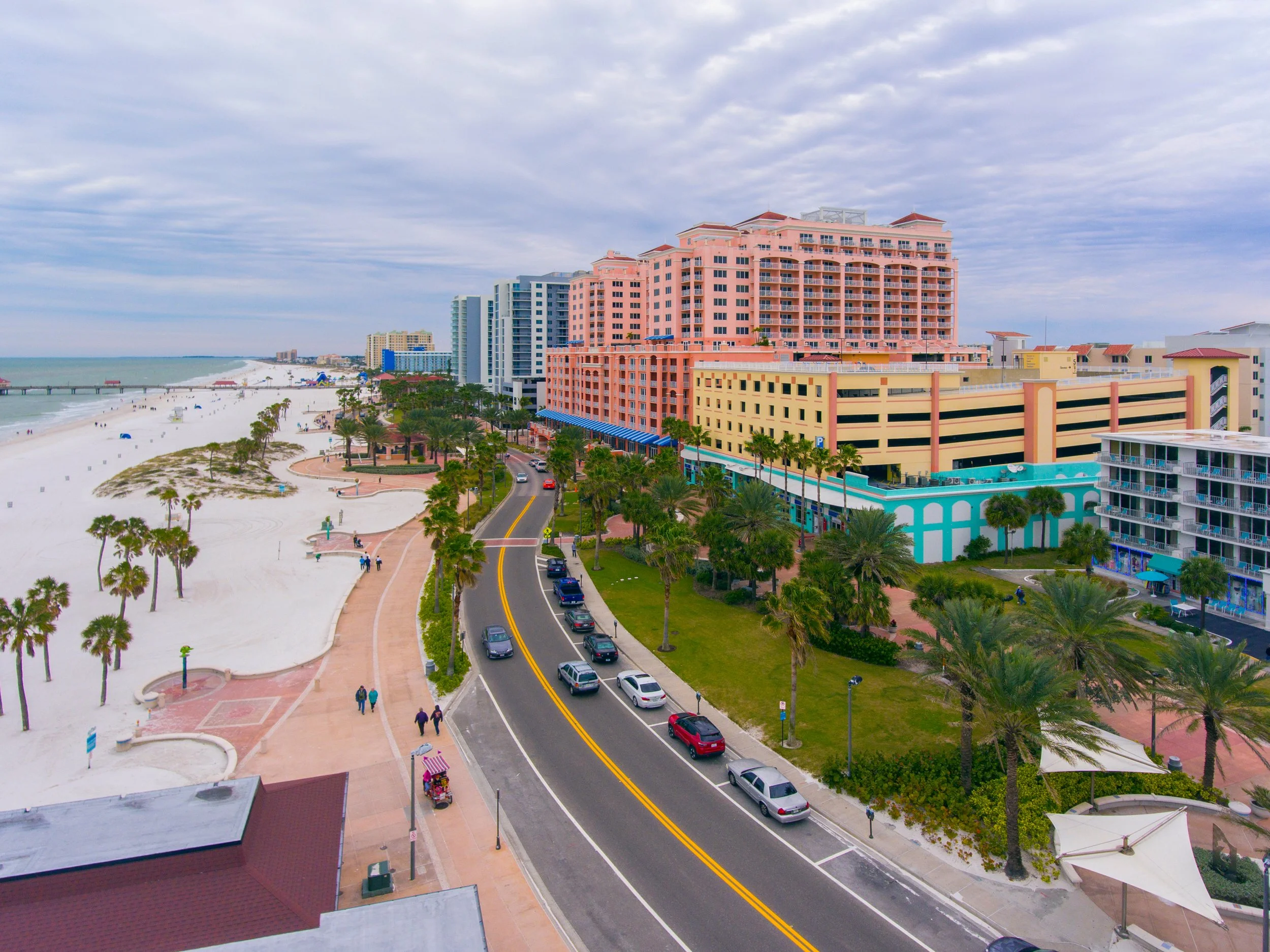
Most communities in this part of Pinellas County are defined by their smallness — a few thousand residents, a single ZIP code, a residential character so deliberate it feels curated. Clearwater is the exception. With roughly 117,000 residents, a downtown, an airport, a hospital system, and what TripAdvisor named the best beach in the United States in 2019, Clearwater operates at a different scale than its barrier-island neighbors. That’s not a criticism. It’s context.
The city spans both the mainland and the barrier island to its west — Clearwater Beach — connected by a causeway. On one side: a full-service city with the infrastructure, commercial density, and employment base that smaller Gulf Coast communities intentionally lack. On the other: 2.5 miles of white-sand Gulf shoreline that consistently ranks among the finest in North America. The combination is unusual, and it draws a correspondingly broad range of residents.
A City With a Long Memory
The land that became Clearwater has a documented human history reaching back at least a thousand years. The Tocobaga people — a chiefdom associated with the Safety Harbor culture — occupied the coastal areas of what is now Pinellas County from roughly 900 AD until the late 1600s, leaving shell middens and burial mounds that still exist today. The Spanish and later the British moved through the region over the following centuries without establishing permanent settlements.
In 1835, the U.S. Army constructed Fort Harrison on the mainland shore during the Seminole Wars. After the wars concluded, a federal land grant act in 1842 opened the area to settlement, and a small farming and fishing community called Clear Water Harbor began to take shape. Clearwater was incorporated as a city in 1915 — the same year the county designated it the Pinellas County seat — and a bridge crossing Clearwater Harbor connected the mainland to the barrier island that would eventually become Clearwater Beach.
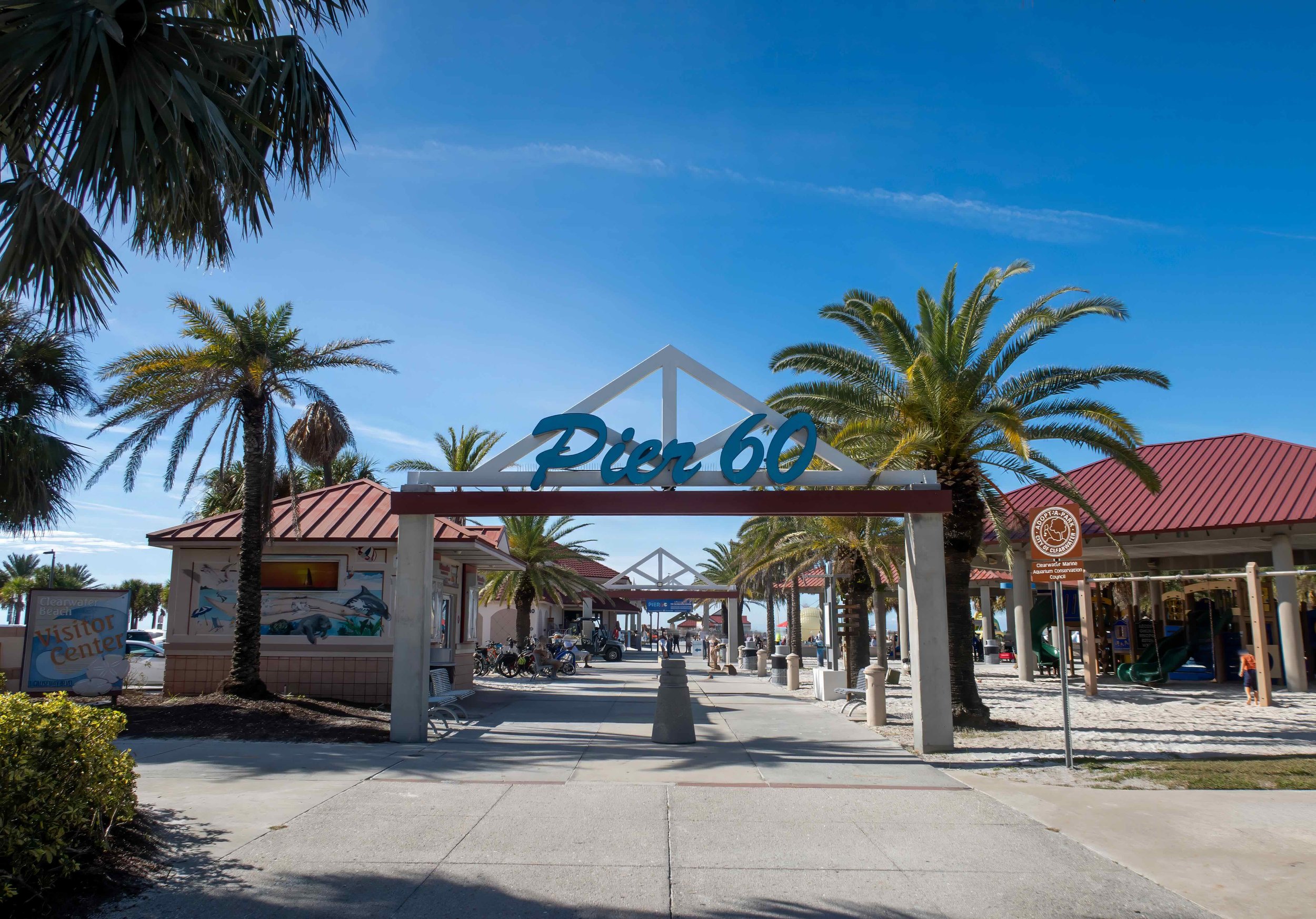
Clearwater Beach itself was officially renamed from "Tate’s Island" in 1924. In the decades that followed, it evolved from a fishing and swimming destination for Tampa Bay residents into a nationally recognized tourist draw. The Pier 60 fishing pier — now a nightly celebration space called Sunsets at Pier 60 — has been a Clearwater Beach fixture for generations.
What Life Here Looks Like
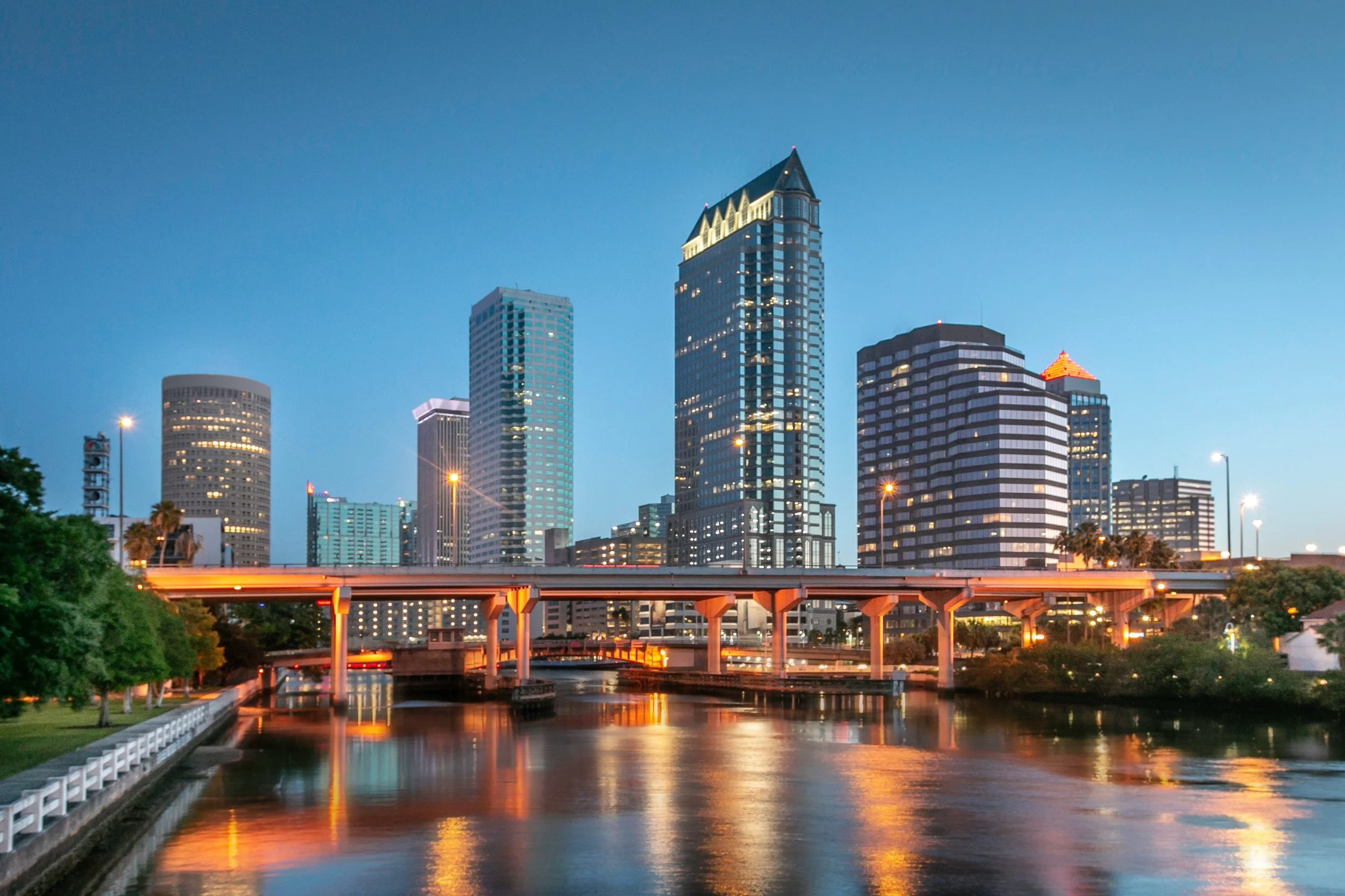
Clearwater is not a single thing. It is a city with distinct neighborhoods and use cases that don’t always resemble each other. The barrier island — Clearwater Beach — is a resort destination with hotels, vacation rentals, restaurants, and high-rise condominiums. The mainland contains established residential neighborhoods, commercial corridors, a small downtown with waterfront dining and entertainment, and the support infrastructure — hospitals, schools, shopping, professional services — that most smaller Gulf Coast communities have to leave the island to find.
The Clearwater Marine Aquarium, home of Winter the dolphin and her story that became the film Dolphin Tale, draws visitors from across the country. Pier 60 hosts the Sunsets at Pier 60 festival every evening year-round — buskers, artisans, and Gulf sunsets on a predictable schedule. Coachman Park, currently undergoing a significant renovation, anchors the downtown waterfront. Cleveland Street runs through the city’s walkable downtown district.
The resident profile is more diverse than the smaller barrier-island communities. The median age of 43 is notably younger than neighboring communities — Indian Rocks Beach, Indian Shores, and Redington Shores all trend into their late 50s and early 60s. With a near-even split between owners and renters (51% / 49%), Clearwater also has a more active rental market, including significant short-term rental activity on the beach side of the causeway.
Geography & Location
Clearwater sits at the northern end of the Pinellas barrier island chain, directly across Clearwater Harbor from Clearwater Beach. The city is the fourth-largest in the Tampa Bay metro area and functions as the commercial and governmental hub for the entire upper Pinellas peninsula. St. Pete/Clearwater International Airport provides regional air access roughly 15 minutes from the beach. Tampa International Airport is approximately 30 minutes by car via the Courtney Campbell Causeway.
The surrounding communities on the barrier island to the south — Belleair Beach, Indian Rocks Beach, Indian Shores, Redington Shores, Redington Beach, and Madeira Beach — all draw on Clearwater’s commercial infrastructure for healthcare, major retail, and government services while maintaining their own distinct residential characters. For buyers considering the Gulf Coast corridor, Clearwater is both a destination and a reference point.
Flood Zone & Insurance: What to Know Before You Buy
Clearwater’s flood risk profile varies significantly by location. Clearwater Beach — the barrier island — sits at very low elevation (often 2–4 feet above mean sea level) and carries substantial FEMA Special Flood Hazard Area (SFHA) exposure. Mainland Clearwater neighborhoods range from similarly low-lying waterfront areas to higher-elevation inland parcels with minimal flood risk. Flood insurance costs for barrier-island properties have risen materially across Pinellas County following Hurricanes Helene and Milton, and properties near Clearwater Beach should be evaluated with current elevation certificates and insurance quotes in hand.
The current Clearwater Market Report addresses active post-hurricane conditions, recent substantial-damage determinations, and their effect on the local transaction landscape. If you’re evaluating a specific property, always obtain a current elevation certificate and at least two insurance quotes before making an offer. This is not optional advice.
📊 Ready to go deeper? The Clearwater Market Report covers current inventory, median pricing, buyer/seller market conditions, and hurricane-recovery context with data sourced directly from RPR and Pinellas County public records. Updated quarterly. → Read the Clearwater Market Report