
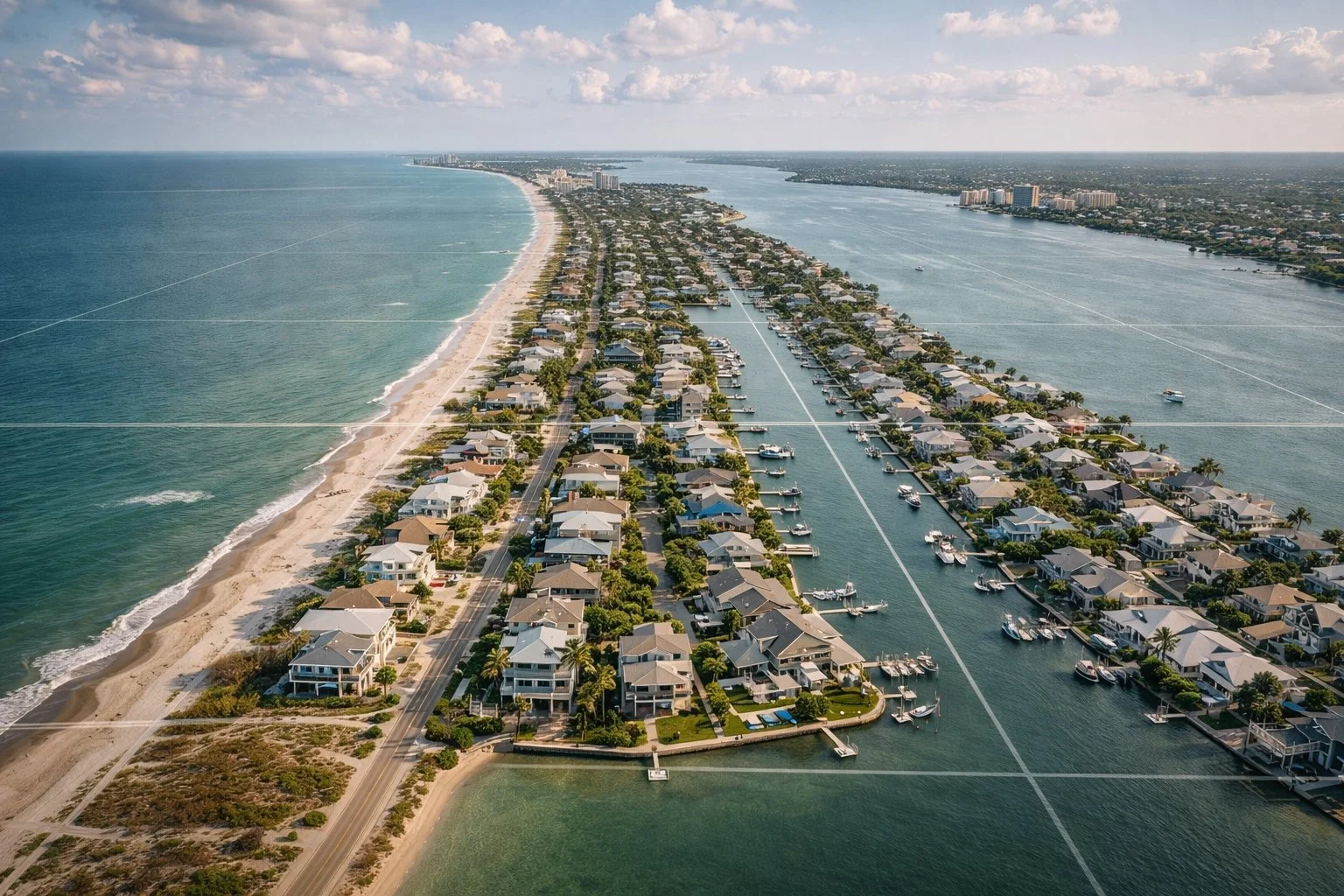
Short-Term Rental Regulations Across Pinellas County’s Gulf Coast Beach Communities
Barrier Island Guides — Updated April 2026 — Covering 11 Communities from Clearwater to St. Pete Beach
The difference between two homes a few blocks apart — or even on the same street but in different zoning districts — can be the difference between a thriving vacation rental business and a property that legally cannot be rented for less than six months. On Pinellas County’s Gulf Coast, short-term rental regulations are not uniform, not simple, and not static.
Some towns here have 7-month rental minimums backed by decades-old grandfathered ordinances. Others have no rental restrictions at all. Several sit somewhere in the middle, with rules that depend entirely on a single address and its zoning classification. This guide breaks down exactly where each community stands — so you know before you buy.
Florida’s State Framework: What Every Buyer Must Know First
Before the community-by-community rules make sense, you need to understand the state-level baseline that governs all of them.
The DBPR License Requirement
Any property rented more than three times per calendar year for periods shorter than 30 days requires a Florida Department of Business and Professional Regulation (DBPR) vacation rental license. This is a statewide requirement, separate from any local permit, and it applies even in communities that are otherwise permissive. Operating without one carries significant fines.
The 2011 Grandfather Rule — Why Rules Vary So Dramatically
In 2011, Florida law established that local governments may not prohibit vacation rentals or regulate their frequency or duration — unless they had such an ordinance in place before June 1, 2011. Cities with pre-existing STR restrictions had those rules “grandfathered,” giving them full authority to enforce regulations that would otherwise be preempted by state law. This is why you see communities like Belleair, North Redington Beach, Redington Beach, and Redington Shores with some of the strictest rules in Florida — all legally protected by that 2011 cutoff.
State Preemption Remains Intact
In 2024, the Florida Legislature passed SB 280, which would have rolled back local STR authority significantly. Governor DeSantis vetoed the bill, preserving local control. As a result, local ordinances — however strict — remain fully enforceable. There is no current movement at the state level to override these communities’ regulations.
Taxes on Short-Term Rentals
Vacation rentals in Pinellas County are subject to Florida State Sales Tax (6%) plus a discretionary surtax, and the Pinellas County Tourist Development Tax (6%) on all guest stays of six months or fewer. Total combined tax on guests is typically around 13%, which must be collected and remitted monthly or quarterly.
Quick Reference: All 11 Communities at a Glance
The table below summarizes each community’s current STR posture. Full details and nuances for each city follow in the sections below.
| Community | STR Status | Key Restriction | Permit / Registration |
|---|---|---|---|
| Belleair | Effectively banned | 7-month minimum stay in all residential zones | Grandfathered ordinance; code enforcement |
| Clearwater | Banned (residential) | 31-day minimum in all residential districts; allowed in Tourist / Business zones only | DBPR state license; local tax receipt where eligible |
| Indian Rocks Beach | Permitted | Annual registration required; max 10 guests; safety inspections | Annual Vacation Rental Registration (VRR) + DBPR license |
| Indian Shores | Highly permissive | No town-level rental restrictions; HOA rules may apply | DBPR state license + county tourist tax |
| Madeira Beach | Zone-dependent | Prohibited in most residential zones; Vacation Rental Restriction Map governs | Business tax receipt in permitted zones; DBPR license |
| North Redington Beach | Effectively banned | 90-day minimum stay — all residential zones | $500/day fine for violations |
| Redington Beach | Effectively banned | 181-day (6-month) minimum in Districts 2 & 3; town pursuing complete ban | $500/day fine; ongoing litigation |
| Redington Shores | Very limited | RS-7/RS-10: 181-day min • RM-15/RD-15: 30-day min | $500/day fine for violations |
| St. Pete Beach | Highly limited | Max 3 STRs per year in RM/Pass-a-Grille zones; most zones prohibit | Fines up to $5,000/day for violations |
| Tierra Verde | Permitted (county rules) | Unincorporated Pinellas County; Certificate of Use required; max 10 guests | County Certificate of Use; $150 initial inspection / $100 biennial renewal |
| Treasure Island | Zone-dependent | Not permitted in RU-75 or RM-15 zones; allowed in CG, RFM-30, RFH-50, PR-MU zones | Local Business Tax + 6% tourist development tax |
Community-by-Community Breakdown
Each section below covers the key rules, what they mean in practice, and what buyers and investors specifically need to know.
Belleair
Belleair is the most restrictive community in this guide. The Town prohibits rentals of residential properties for periods of less than seven months. In practical terms, this eliminates vacation rentals, Airbnb-style short stays, and monthly rentals alike. Only a semi-annual lease satisfies the minimum.
This is a grandfathered ordinance predating Florida’s 2011 preemption law, giving the Town full legal authority to enforce it. Belleair is a private, luxury enclave, and its residents have consistently supported these restrictions to preserve the community’s character.
For homebuyers: If you want a community where you will not have vacation rental neighbors, Belleair is one of the best-protected addresses on the Gulf Coast.
Clearwater
Clearwater draws a hard line: short-term rentals are prohibited in all residential zoning districts. Any rental of fewer than 31 days or one calendar month in a residential zone is illegal. Residential property owners can advertise for monthly rentals — they cannot advertise for daily or weekly stays.
STRs are permitted in Tourist Districts and certain Business Districts, where transient accommodations are expected. A small number of HOA-governed condo or townhome communities may also allow short-term rentals through their own association rules — but this is property-specific and must be verified individually before purchase.
Clearwater’s Code Compliance Division actively enforces its STR ordinance and is known for strict enforcement. Buyers should not assume an active Airbnb listing indicates legal compliance.
Indian Rocks Beach
Indian Rocks Beach is one of the most established short-term rental markets on Pinellas County’s barrier islands. The city adopted a comprehensive STR ordinance (Ordinance 2023-02) effective August 1, 2023, creating a structured registration and compliance framework that allows STRs while setting clear standards for guests, operators, and neighbors.
Registration Requirements
Any property owner wishing to rent for short-term stays must complete an Annual Vacation Rental Registration (VRR) application with the City. This is separate from the state DBPR license (also required). Advertising a property for short-term rental without a valid VRR is a violation subject to fines.
Key Operational Rules
- Maximum occupancy: 10 guests per unit (a proposed increase to 12 was under consideration in early 2025 — verify current limit)
- Safety inspections: Required as part of the annual registration process
- Enforcement: Active — the city monitors for unregistered operators and compliance violations
For homebuyers: Indian Rocks Beach has a significant existing STR inventory and this activity is part of the community’s character. If you prefer minimal vacation rental neighbor activity, IRB may not be the right fit.
Indian Shores
Indian Shores is the most permissive short-term rental market in this guide. According to the Town’s official FAQ, Indian Shores has no town-level rental restrictions — no minimum rental duration, no frequency limits. The town does not impose the kind of registration or occupancy rules found in Indian Rocks Beach.
This has made Indian Shores a popular destination for vacation rental investors and a community with a thriving mix of vacation properties and full-time residents. Active Airbnb and VRBO listings are abundant throughout the town.
What “No Town Restrictions” Still Means
- DBPR license: Still required if renting more than 3 times per year for stays under 30 days.
- Pinellas County Tourist Development Tax: 6% tax applies to all guest stays of 6 months or fewer.
- HOA / Condo Association rules: If your property is in a condominium or HOA, the association’s documents may impose their own rental restrictions that supersede the town’s permissive stance. Always review condo docs before purchasing with STR intent.
- Zoning confirmation: Verify your property is within Town of Indian Shores limits, not unincorporated county territory.
Madeira Beach
Madeira Beach takes a zoning-based approach: whether you can legally operate an STR depends entirely on your property’s specific zoning classification. The City maintains a Vacation Rental Restriction Map that delineates where STRs are permitted and where they are not. This map is essential research for any buyer with STR intent — verify your specific address against it before making any offer.
In most residential zones, short-term rentals of fewer than 30 days are prohibited. Rentals of 30 days or more are generally permitted across all zoning districts. Where STRs are legally eligible, a City Business Tax Receipt is required in addition to the DBPR state license.
The 30-day alternative: In permitted zones, or for owners whose properties are in restricted zones, monthly rentals (30+ days) are a viable income strategy given the strong demand for seasonal winter stays along this corridor.
North Redington Beach
North Redington Beach requires a minimum rental period of 90 consecutive days in all residential zoning districts. This eliminates the traditional vacation rental market for residential properties. The restriction is a grandfathered pre-2011 ordinance codified under Chapter 78-1 “Residential Dwelling Unit” in the town’s municipal code.
The 90-day minimum does allow for longer seasonal rentals. A winter-season tenant staying from January through March satisfies the minimum — making true “snowbird” rentals viable, but not week-to-week or monthly vacation stays.
For homebuyers: North Redington Beach is one of the most protected communities on the Gulf Coast for those who value residential stability and minimal transient traffic. The exclusivity, the Gulf-front addresses, and the enforced minimum stays make it one of the quietest residential corridors on the barrier islands.
Redington Beach
Redington Beach is the most aggressively anti-vacation-rental community in Pinellas County. The town requires a minimum rental period of 181 consecutive days (approximately 6 months) for single-family properties in Districts 2 and 3 — covering the town’s primary residential areas.
Beyond the six-month minimum, the town has been actively pursuing a complete ban on vacation renters through litigation. In a town referendum, 86% of voters approved a measure to completely ban vacation renters. The town has filed lawsuits seeking to validate that referendum. As of early 2026, litigation is ongoing and the regulatory environment could shift further in the restrictive direction.
For homebuyers: The 86% referendum result is the clearest community signal in Pinellas County. If you want a neighborhood with near-zero vacation rental activity and a strong community consensus against transient traffic, Redington Beach is worth serious consideration.
Redington Shores
Redington Shores uses a district-based approach to rental restrictions, but the net result is highly restrictive across most property types. The rules differ significantly by zoning:
| Zoning District | Property Type | Minimum Rental Period |
|---|---|---|
| RS-7 / RS-10 | Single-Family Residential | 181 consecutive days |
| RM-15 / RD-15 | Multi-Family / Duplex | 30 days |
A special use permit for transient rentals in residential districts may be granted for specified limited periods under specific circumstances, but these are rare and not guaranteed.
As in neighboring communities, advertising a property for transient rental by any method constitutes operation of a transient rental. Each day of violation is a separate offense subject to a $500.00 fine. Always confirm the specific zoning district of any Redington Shores property before making any assumptions about rental potential.
St. Pete Beach
St. Pete Beach has a carefully calibrated — and highly restrictive — STR policy enforced with substantial fines.
The Three-Rental Rule
In Residential Medium (RM) zoning districts and the Pass-a-Grille overlay district, property owners may rent for fewer than 30 days a maximum of three times per calendar year. A fourth short-term stay — even one night — is a violation. In 2025, a Pass-a-Grille homeowner faced a $4,500 fine for exceeding the three-rental limit by a single stay.
The 30-Day Alternative
In any zoning district, property owners may rent their property as many times as desired, provided each rental period is 30 days or longer. Monthly seasonal rentals (winter stays) are viable — making St. Pete Beach a possible market for snowbird-style income without triggering STR restrictions.
For STR investors, three stays per year is insufficient to build a meaningful income stream. St. Pete Beach is not a viable primary STR investment market under current regulations.
Tierra Verde
Tierra Verde is not an incorporated city or town. It operates as an unincorporated community within Pinellas County under a designated Tierra Verde Community Overlay. This means Tierra Verde properties follow Pinellas County’s short-term rental rules rather than any municipal code.
In March 2025, Pinellas County adopted a new STR ordinance for unincorporated areas establishing a Certificate of Use program with clear operational standards.
Pinellas County STR Certificate of Use Requirements
- Certificate of Use required for each STR property; non-transferable and property-specific
- Initial property inspection: $150; renewed every two years at $100
- Maximum occupancy: 10 guests (2 per bedroom + 2 in common areas)
- Parking: 1 off-street space per 3 guests, rounded up; front-lawn parking does not count
- Quiet hours: 10:00 p.m. – 9:00 a.m.
Confirm whether your specific property is in unincorporated Pinellas County or within an incorporated boundary — portions of the area may have different governance.
Treasure Island
Treasure Island uses its zoning code to distinguish residential neighborhoods — where “Tourist Dwellings” are not permitted — from commercial and tourist-zoned areas where they are fully allowed.
Where Tourist Dwellings Are NOT Permitted
- RU-75 (Single-Family Residential): Tourist Dwellings prohibited. A property is presumed to be a Tourist Dwelling if publicly advertised for rental or if there are more than 2 changes of occupancy in a 12-month period.
- RM-15 (Multi-Family Residential): Tourist Dwellings prohibited. Threshold is more than 6 changes of occupancy in a 12-month period.
Where Tourist Dwellings ARE Permitted
- CG (Commercial General), RFM-30, RFH-50, PR-MU Core, PR-MU Gulf Boulevard — Tourist Dwellings permitted without occupancy-change restrictions.
For investors: Focus acquisition efforts on CG, RFM-30, RFH-50, or PR-MU zoned properties if STR income is the goal. The occupancy-change triggers also mean residential buyers who intend only occasional rentals should be aware that frequent turnover can result in a Tourist Dwelling presumption.
How to Use This Guide: A Decision Framework
Best communities for STR investors
- Indian Shores — Maximum flexibility, no town-level restrictions. Most permissive market in the guide.
- Indian Rocks Beach — Well-established STR market with a clear, predictable regulatory framework and strong rental demand.
- Tierra Verde — Permitted under Pinellas County’s 2025 program with a defined compliance pathway.
- Madeira Beach & Treasure Island (specific zones) — Viable in permitted zones only; requires zoning verification before any offer.
Best communities for buyers who want minimal STR neighbor activity
- Belleair — 7-month minimum; one of the most protected residential addresses on the Gulf Coast.
- North Redington Beach — 90-day minimum; quiet, exclusive residential character.
- Redington Beach — 181-day minimum; 86% of residents voted to ban vacation renters entirely.
- Redington Shores (single-family) — 181-day minimum in RS-7 and RS-10 districts.
Universal checklist before any purchase
- Confirm the exact zoning classification of the specific property — not just the general community.
- Determine whether the property is within an incorporated city or in unincorporated Pinellas County.
- If the property is in a condo or HOA, review the declaration, bylaws, and rules for rental restrictions.
- Verify the current status of any pending ordinance changes directly with the municipality.
- Consult a Florida real estate attorney familiar with local STR law before closing.
- Register with DBPR if you intend to operate as a vacation rental.
- Understand your tax obligations: Florida state sales tax + Pinellas County tourist development tax.
Official Resources at a Glance
| Community | Official Website | STR / Code Enforcement |
|---|---|---|
| Belleair | townofbelleair.com | townofbelleair.com/429/Code-Enforcement |
| Clearwater | myclearwater.com | Code Compliance Division: (727) 562-4720 |
| Indian Rocks Beach | indian-rocks-beach.com | /government/vacation-rental-information |
| Indian Shores | myindianshores.com | myindianshores.com/FAQ.aspx |
| Madeira Beach | madeirabeachfl.gov | /code-enforcement |
| North Redington Beach | townofnorthredingtonbeach.com | /residents/rental-restrictions |
| Redington Beach | townofredingtonbeach.com | /short-term-rental-ordinance |
| Redington Shores | townofredingtonshores.com | /rental-regulations |
| St. Pete Beach | stpetebeach.org | /438/Short-Term-Rental-Rules-Regulations |
| Tierra Verde (County) | pinellas.gov | pinellas.gov/str |
| Treasure Island | mytreasureisland.org | Community Development: (727) 547-4575 x230 |
A Note on Regulatory Change
The short-term rental landscape in Pinellas County is not static. Several communities are actively revising, challenging, or litigating their STR ordinances — Redington Beach’s ongoing litigation is the most prominent example, but Indian Rocks Beach was also in the middle of an occupancy amendment process as of early 2026. New state legislation could alter the balance between local and state authority at any time.
Gulf Coast Property Report will continue to monitor and update this guide as regulations evolve. We strongly encourage any buyer or investor to verify current regulations directly with the relevant municipality — and with a local real estate attorney — before making any purchase decision based on short-term rental potential.
Disclaimer: This page is for informational and educational purposes only and does not constitute legal, tax, or real estate advice. Regulations described reflect research conducted as of April 2026 and are subject to change. Nothing in this guide should be relied upon as a guarantee of any property’s STR eligibility, income potential, or zoning status. Always verify current regulations directly with the applicable municipality, Pinellas County, and a qualified Florida real estate attorney before making any purchase or investment decision.