The Complete Guide to Buying Property on Florida’s Pinellas County Barrier Islands
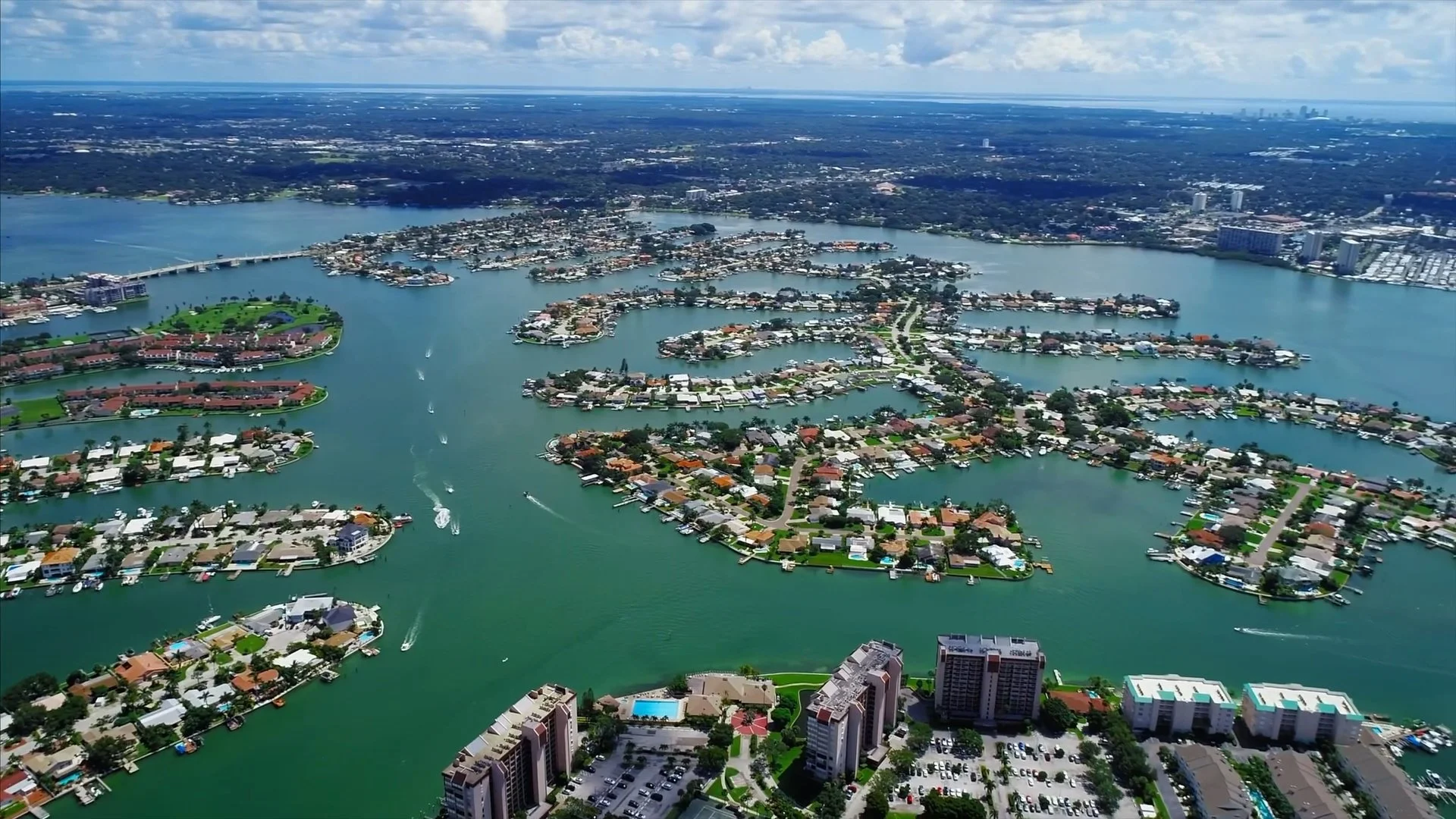
Understanding the differences between Florida’s Gulf Coast beach communities can help buyers make informed decisions when researching coastal property.
A comparison of Clearwater Beach, Indian Rocks Beach, Indian Shores, Madeira Beach, and Belleair Beach.
| Community | Atmosphere | Property Types | Tourism | Walkability | Best For |
|---|---|---|---|---|---|
| Clearwater Beach | Active resort destination | High-rise condos | High | High | Walkable nightlife & vacation rental demand |
| Belleair Beach | Residential coastal community | Single-family homes | Low | Low | Privacy & quiet beach living |
| Indian Rocks Beach | Relaxed beach town | Homes + small condos | Moderate | Moderate | Families & laid-back beach lifestyle |
| Indian Shores | Quiet coastal stretch | Mostly condos | Moderate | Low | Vacation rental investors |
| North Redington Beach | Exclusive residential enclave | Single-family homes | Very Low | Low | Privacy, boating & long-term owners |
| Redington Beach | Quiet neighborhood feel | Single-family homes | Very Low | Low | Buyers wanting residential beach character |
| Madeira Beach | Mixed tourism & residential | Condos + homes | Moderate | Moderate | Buyers wanting beach access & services |
| Treasure Island | Relaxed mid-corridor community | Homes + condos | Low–Moderate | Moderate | Full-time residents & Gulf-front lifestyle |
| St. Pete Beach | Resort town with historic district | Condos + beach homes | Moderate–High | Moderate–High | Vacation rentals, Pass-a-Grille character & St. Pete proximity |
| Tierra Verde | Affluent causeway island enclave | Single-family homes | Very Low | Very Low | Established professionals, boating lifestyle & Fort De Soto access |
Each of these barrier island communities offers a different coastal lifestyle. Below we explore the characteristics, housing options, and market trends of each area in more detail.
Florida’s Gulf Coast barrier islands are some of the most desirable coastal communities in the United States. With white sand beaches, warm Gulf waters, and a relaxed coastal lifestyle, these small beach towns attract vacationers, second-home buyers, and retirees from across the country.
Pinellas County, located on Florida’s central Gulf Coast, is home to a chain of barrier islands stretching from Clearwater Beach south toward St. Pete Beach. Each community along this stretch of coastline has its own personality, housing mix, and real estate dynamics. Some areas are vibrant tourist destinations with high-rise condominiums and active nightlife, while others maintain a quiet residential atmosphere with smaller condo buildings and beachfront homes.
For buyers researching coastal property, understanding the differences between these communities is important. Clearwater Beach, Indian Rocks Beach, Indian Shores, Madeira Beach, and Belleair Beach each appeal to different types of buyers and investors.
This guide provides an overview of the Pinellas County barrier island real estate market, the characteristics of each community, and the key factors buyers should consider when evaluating coastal property in this region.
Understanding the Pinellas County Barrier Islands
Barrier islands are narrow strips of land that run parallel to the mainland coastline. Along Florida’s Gulf Coast, these islands form a natural buffer between the Gulf of Mexico and the mainland communities of Pinellas County.
Unlike mainland cities such as Clearwater, Largo, or St. Petersburg, barrier island communities are surrounded by water on both sides. The Gulf of Mexico lies to the west, while the Intracoastal Waterway separates the islands from the mainland.
These islands are known for their soft white quartz sand beaches, which consistently rank among the best beaches in the United States. The sand originates from the Appalachian Mountains and has been gradually transported south by rivers over thousands of years.
Accessibility is another factor that makes these communities attractive. Most barrier island towns are located within 30 to 45 minutes of Tampa International Airport, one of the largest airports in the southeastern United States. This convenient access allows visitors and property owners to travel easily from major cities across the country.
While the barrier islands share many similarities, each community offers a distinct mix of housing, tourism activity, and lifestyle.
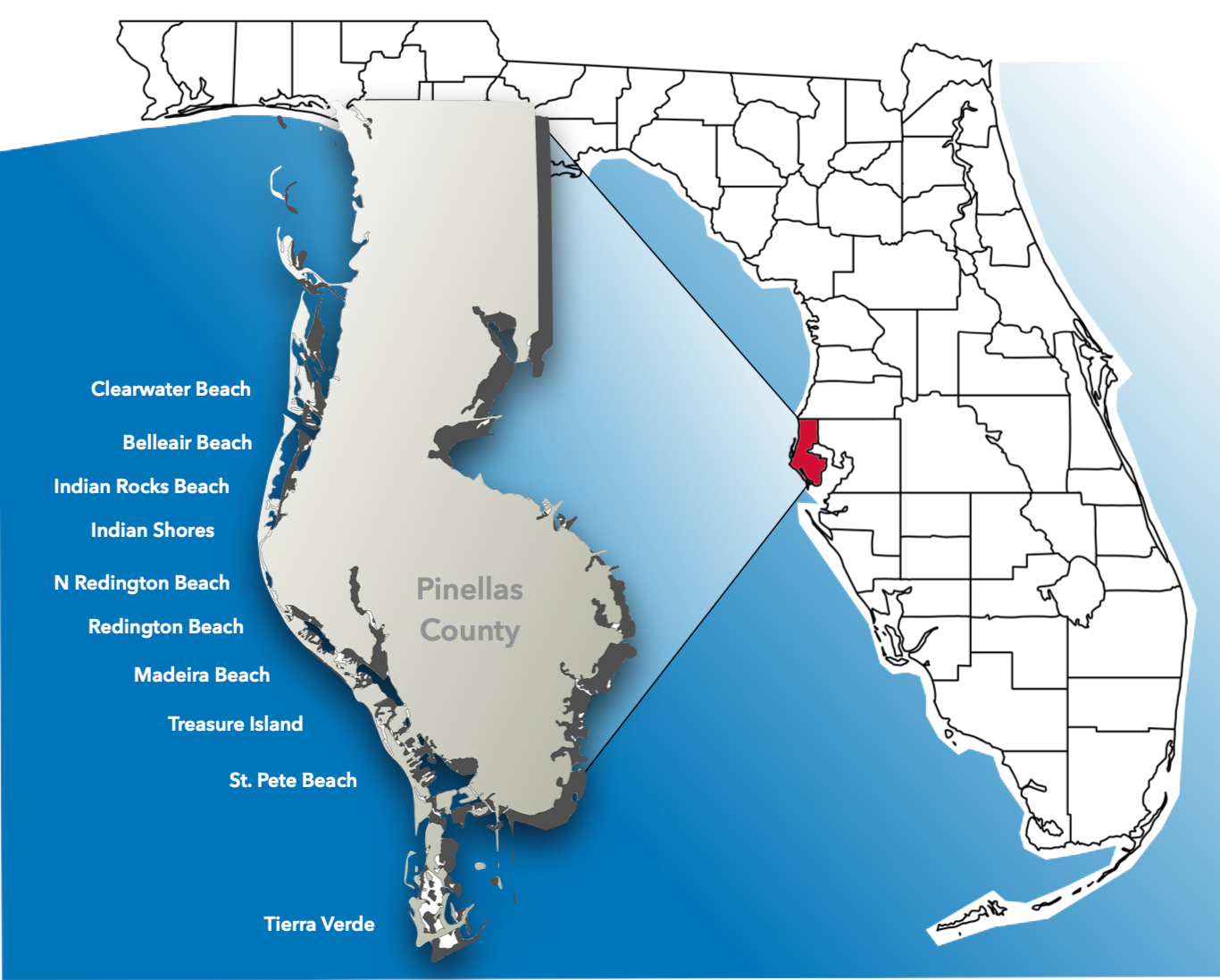
This map shows Pinellas County relative to Florida and the chain of barrier island communities along Florida’s central Gulf Coast, including Clearwater Beach, Belleair Beach, Indian Rocks Beach, Indian Shores, N Redington Beach, Redington Beach, Madeira Beach, Treasure Island, St. Pete Beach and Tierra Verde
The following snapshot highlights recent market indicators across several Pinellas County barrier island communities. Market conditions can shift throughout the year, but these metrics provide a helpful view of pricing, inventory levels, and market pace.
| Community | Median Sold Price | Months of Inventory | Median Days on Market | Sold-to-List Ratio |
|---|---|---|---|---|
| Clearwater Beach | ~$586,000 | ~6.8 months | ~54 days | ~95% |
| Belleair Beach | ~$1,005,000 | ~10.5 months | ~82 days | ~93% |
| Indian Shores | ~$700,000 | ~11.5 months | ~96 days | ~94% |
| North Redington Beach | $1,280,000 | 8.67 months | 111 days | 96.7% |
| Madeira Beach | ~$490,000 | 9.53 months | 86 days | 92% |
| Treasure Island | $590,000 (MLS) | 10.74 months | 27 days | 93.6% |
| Tierra Verde | $812,500 | 16 months | 31 days | 96.3% |
Each community here has its own personality, housing mix, and post-storm reality — and the data reflects that. One number worth reading carefully: median sold price. In several of these markets, flood-damaged properties and move-in-ready homes are closing in the same zip code at dramatically different price points, and when both get counted together, the median can mislead in either direction. Before drawing conclusions from any figure in this table, know which type of property you're actually comparing it to.
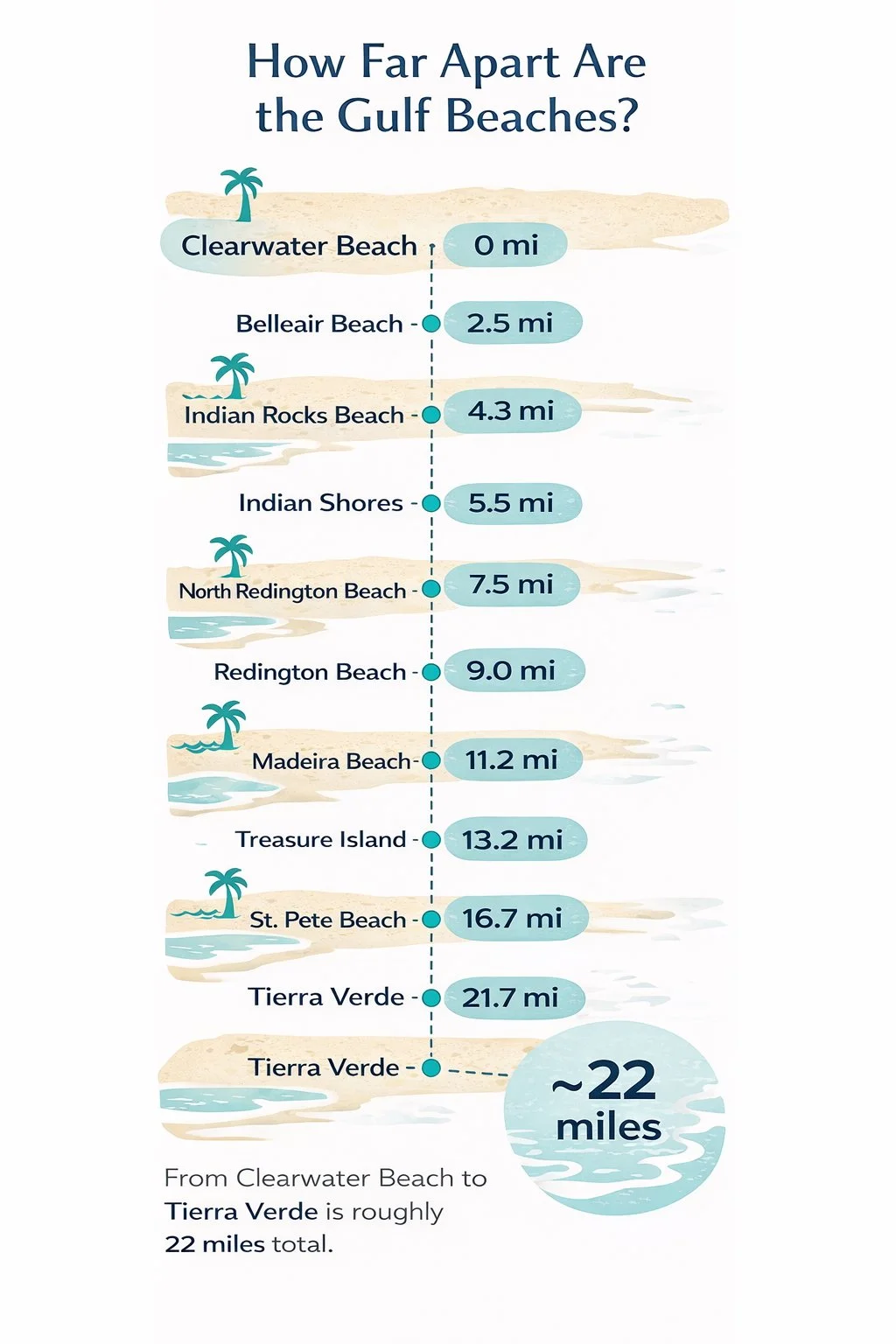
The Pinellas County barrier islands form a continuous chain of beach communities along the Gulf of Mexico. From north to south, the primary communities covered in this guide include Clearwater Beach, Belleair Beach, Indian Rocks Beach, Indian Shores, and Madeira Beach.
Clearwater Beach sits at the northern end of this stretch and is one of the most well-known beach destinations in Florida. Moving south, Belleair Beach offers a quieter residential environment with larger waterfront homes. Indian Rocks Beach provides a relaxed beach town atmosphere with walkable restaurants and smaller condominium buildings.
Further south, Indian Shores is primarily composed of condominium developments that attract vacation renters and seasonal residents. Madeira Beach, located just north of St. Pete Beach, blends tourism activity with residential neighborhoods and is home to the popular John’s Pass Village area.
Understanding where each of these communities sits geographically can help buyers determine which areas best align with their lifestyle preferences.
Barrier Island Real Estate Market Overview
The barrier island real estate market tends to behave differently from mainland housing markets. Limited land availability, strong tourism demand, and the appeal of beachfront living all contribute to unique market dynamics.
Inventory levels on the barrier islands are often lower than in mainland communities because there is very little undeveloped land remaining. Most properties consist of existing homes, condominium developments, or older structures that have been renovated or redeveloped over time.
Market data from recent reports suggests that conditions in many barrier island communities have shifted toward a more balanced market after several years of rapid appreciation during the early 2020s. Inventory levels have increased slightly in some areas, giving buyers more options and occasionally more negotiating flexibility.
Typical market indicators used to evaluate these communities include median sale prices, months of inventory, and median days on market. Some areas with heavy tourism demand or limited inventory can still experience relatively strong pricing even when the broader housing market slows.
While the exact figures vary by community and property type, the barrier island market generally reflects a mix of lifestyle buyers, second-home purchasers, and investors seeking vacation rental opportunities.
Mainland vs Barrier Island Living
Buyers researching Florida’s Gulf Coast often compare living on the mainland with owning property on one of the barrier islands. Each option offers advantages depending on lifestyle preferences, insurance considerations, and proximity to the beach.
| Feature | Mainland Pinellas County | Barrier Island Communities Clearwater Beach → St. Pete Beach via Gulf Blvd |
Tierra Verde Pinellas Bayway — causeway island |
|---|---|---|---|
| Beach Access | Short drive; no direct Gulf frontage | Walkable Gulf beach access in most communities; Gulf-front lots in Belleair, Redington, and Treasure Island corridors | No Gulf beach on-island; Fort De Soto Park (1,136 acres, ranked among the best beaches in the U.S.) is adjacent — a 5-minute drive or bike ride |
| Flood Risk | Generally lower; most areas outside FEMA Special Flood Hazard Areas | High across most communities; AE and VE zones throughout; Hurricane Helene (2024) produced significant surge inundation along the full corridor | Highest flood exposure in the portfolio; ~2-foot average elevation; substantial VE-zone coverage; Helene surge reached parts of the island |
| Flood Insurance | Often not required; premiums modest when applicable | Required on most waterfront and Gulf-facing properties; Risk Rating 2.0 premiums typically $3,000–$15,000+ annually depending on elevation and zone | Required on virtually all properties; annual premiums typically $4,000–$18,000+ under Risk Rating 2.0; elevation certificate essential before any offer |
| Tourism Activity | Minimal; primarily residential | Ranges widely — very low in Belleair Beach, Redington Beach, and N. Redington Beach; moderate in Madeira and Treasure Island; high in Clearwater Beach and St. Pete Beach | Very low; no resort or commercial tourist activity; no beachfront entertainment corridor |
| Property Types | Subdivisions, townhomes, condos, single-family residential | High-rise condos (Clearwater), Gulf-front and canal-front single-family homes, beach cottages, waterfront condos; mix varies significantly by community | Almost exclusively single-family waterfront and canal-front homes; 95% owner-occupied — investor and rental inventory is effectively absent |
| Lifestyle | Suburban residential; proximity to Tampa Bay metro amenities | Ranges from resort and walkable nightlife (Clearwater Beach) to quiet, private residential beach living (Belleair Beach, N. Redington Beach, Redington Beach) | Affluent, owner-dominated island character; boating-centric; no commercial strip; high work-from-home rate (~38%); professional and pre-retiree demographic |
| Noise & Activity | Generally quiet year-round | Clearwater Beach and St. Pete Beach see notable peak-season activity; Belleair, |
Because each barrier island community has its own character and housing mix, buyers often focus their search on specific beach towns that match their lifestyle goals.
Buyers considering property along Florida’s Gulf Coast often compare mainland communities with barrier island towns. While both offer proximity to the beach, the lifestyle and practical considerations can be quite different.
Barrier island living typically provides immediate access to the beach, waterfront views, and a walkable coastal environment. Many residents enjoy being able to walk to restaurants, beach access points, and small local shops.
However, coastal living also comes with additional considerations. Properties on the barrier islands are often located in flood zones, which can require flood insurance depending on the property’s elevation and mortgage financing. Building codes and construction standards may also be stricter due to hurricane resilience requirements.
Access to the mainland is provided by bridges connecting the barrier islands to nearby cities such as Clearwater, Largo, and Seminole. During peak tourist seasons, bridge traffic can occasionally increase travel times.
Despite these factors, many buyers find the lifestyle advantages of barrier island living outweigh the additional logistical considerations.
Clearwater Beach Real Estate
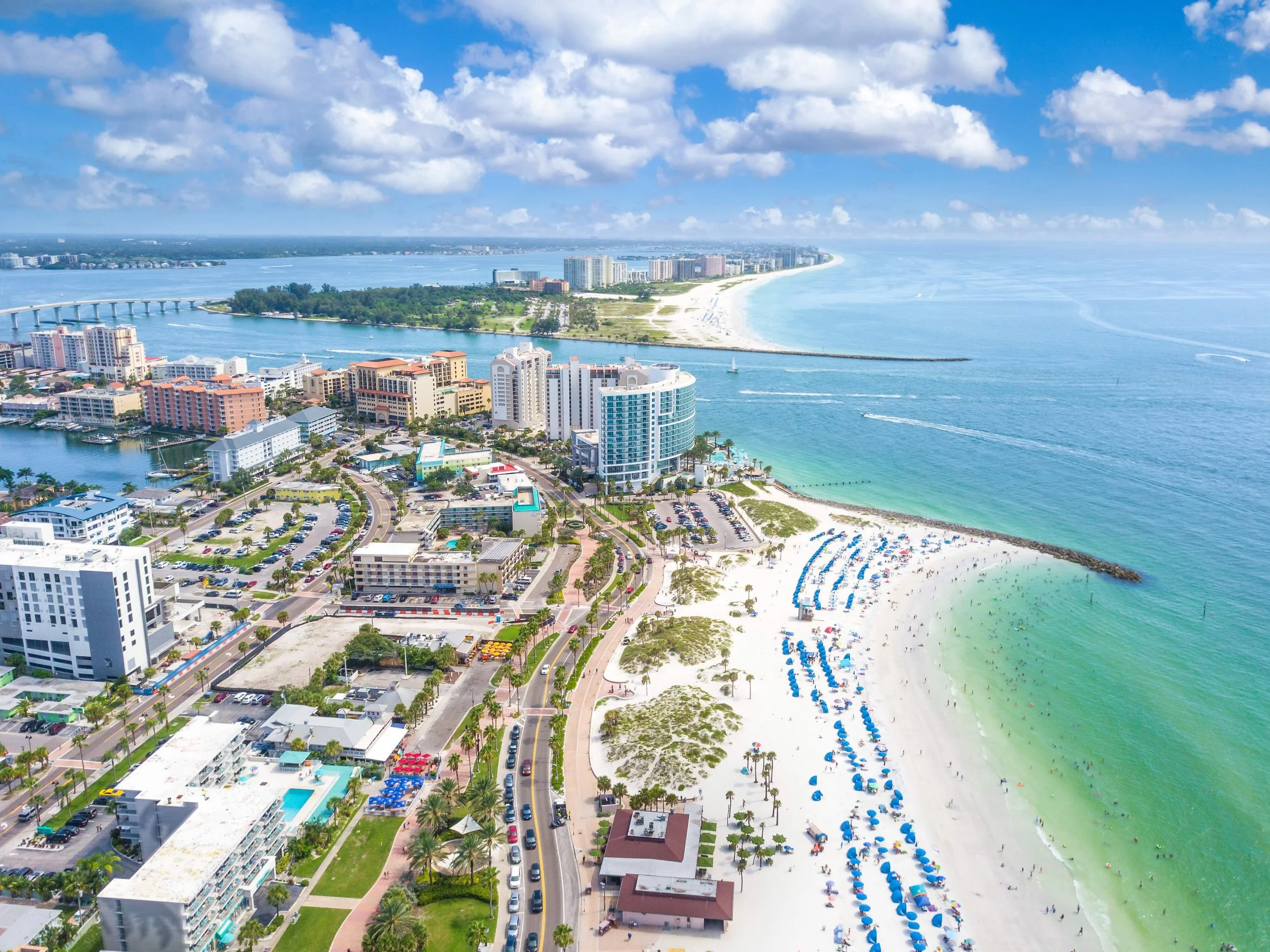
Clearwater Beach is one of the most recognizable beach destinations in Florida. Known for its wide sandy shoreline and vibrant tourism industry, the area attracts visitors from around the world.
The real estate market in Clearwater Beach is dominated by condominium developments, many of which offer Gulf views or waterfront locations along the Intracoastal Waterway. High-rise buildings are common in this area, and several luxury developments have been built in recent years.
The community offers a lively atmosphere with restaurants, shops, and entertainment venues within walking distance of many properties. Pier 60, located along the beachfront, hosts nightly sunset celebrations featuring street performers and local vendors.
Buyers interested in Clearwater Beach often include second-home owners, retirees, and investors exploring vacation rental potential. The walkability and strong tourism presence can make certain properties appealing for short-term rental use where permitted by local regulations.
At the same time, Clearwater Beach can be busier than some of the neighboring communities. Buyers seeking a quieter residential setting may prefer other barrier island towns further south.
Belleair Beach Real Estate
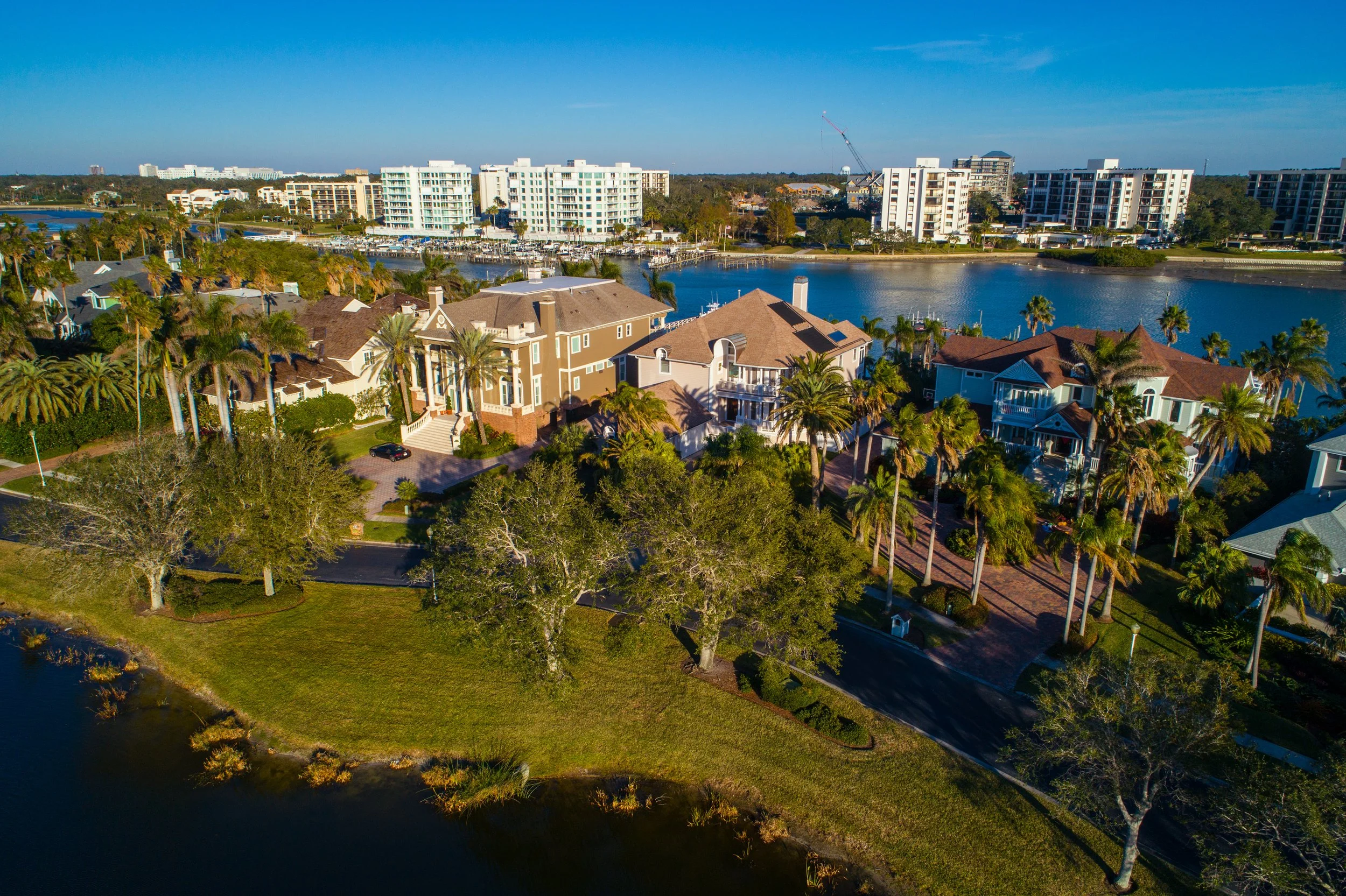
Belleair Beach offers a distinctly different environment from many of the other barrier island communities. The town is primarily residential and features larger waterfront homes with limited commercial development.
Unlike some neighboring areas, Belleair Beach has maintained strict zoning that limits tourism activity and short-term rentals in many areas. This has helped preserve a quiet residential atmosphere.
Buyers interested in Belleair Beach often include those seeking privacy, waterfront living, and larger residential properties along the Gulf or Intracoastal Waterway.
Key Characteristics
• Primarily single-family beachfront homes
• Limited commercial development
• Quiet residential streets and private beach access areas
• One of the least tourist-oriented barrier island communities
Indian Rocks Beach Real Estate
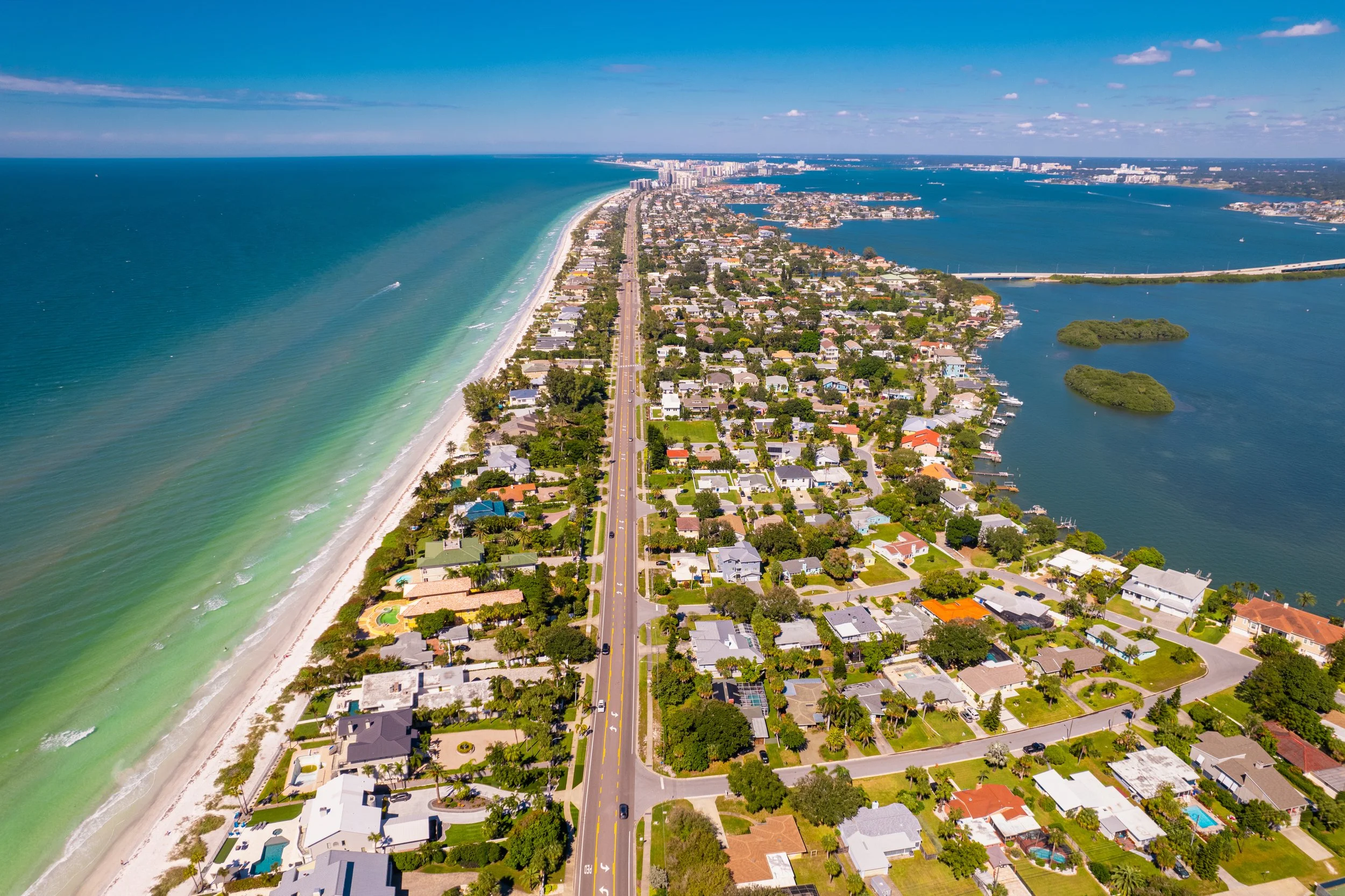
Indian Rocks Beach offers a more relaxed atmosphere compared to some of the larger tourist destinations along the Gulf Coast. This small beach town has maintained a strong sense of community while still attracting visitors who appreciate its laid-back character.
The housing mix in Indian Rocks Beach includes single-family homes, small condominium buildings, and a limited number of mid-rise developments. Many properties are located within walking distance of the beach, local restaurants, and neighborhood parks.
The community is known for its walkable layout and locally owned restaurants, which contribute to a more residential feel than some of the larger tourist areas. Buyers often appreciate the balance between beach access and a quieter environment.
Real estate buyers drawn to Indian Rocks Beach frequently include second-home purchasers, retirees, and families looking for a coastal lifestyle with a small-town feel. The limited size of the community also means that housing inventory can be relatively constrained at times.
Buyers are often drawn to the area because it balances coastal accessibility with a quieter residential environment.
Key Characteristics
• Relaxed beach town atmosphere
• Mix of homes and small condos
• Walkable restaurants and beach access
• Strong local community identity
Typical Buyers
Primary residents, second-home buyers, and those seeking a quieter coastal lifestyle.
Indian Shores Real Estate
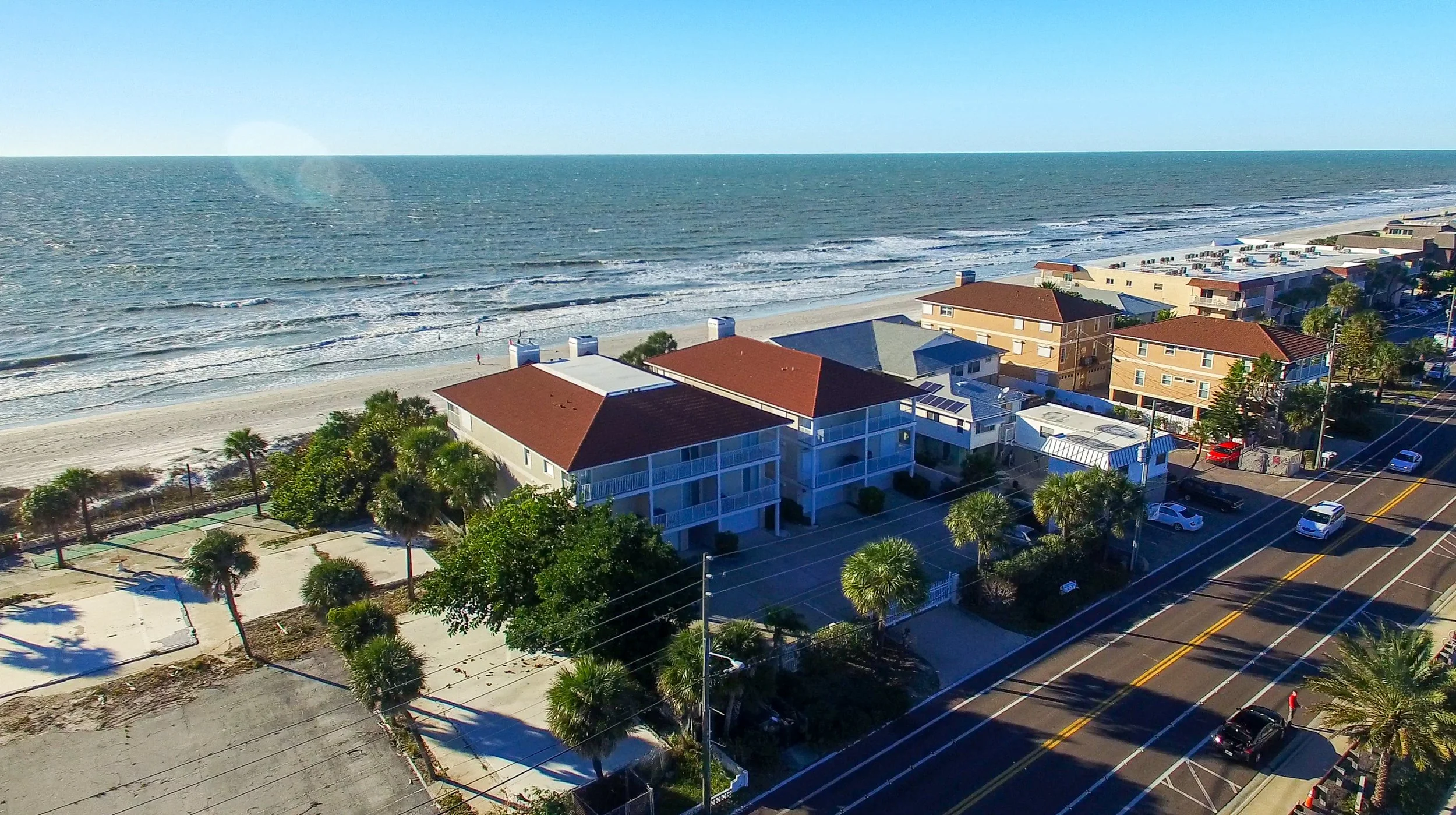
Located just south of Indian Rocks Beach, Indian Shores is a narrow coastal community that features a large concentration of condominium developments.
Many of the buildings in Indian Shores are designed to accommodate vacation rental activity, and the area has historically attracted visitors seeking beachfront accommodations in smaller condo complexes.
Because of the strong presence of condominium buildings, buyers exploring Indian Shores often focus on condo ownership rather than single-family homes. Units with Gulf views or direct beach access tend to attract the most interest.
The community itself remains relatively quiet compared to larger tourist destinations, with a handful of restaurants and beach access points serving residents and visitors.
Key Characteristics
• Long stretch of beachfront condominium buildings
• Quiet coastal setting with limited commercial activity
• Many direct beachfront units with Gulf views
• Popular area for vacation rental investment properties
North Redington Beach Real Estate
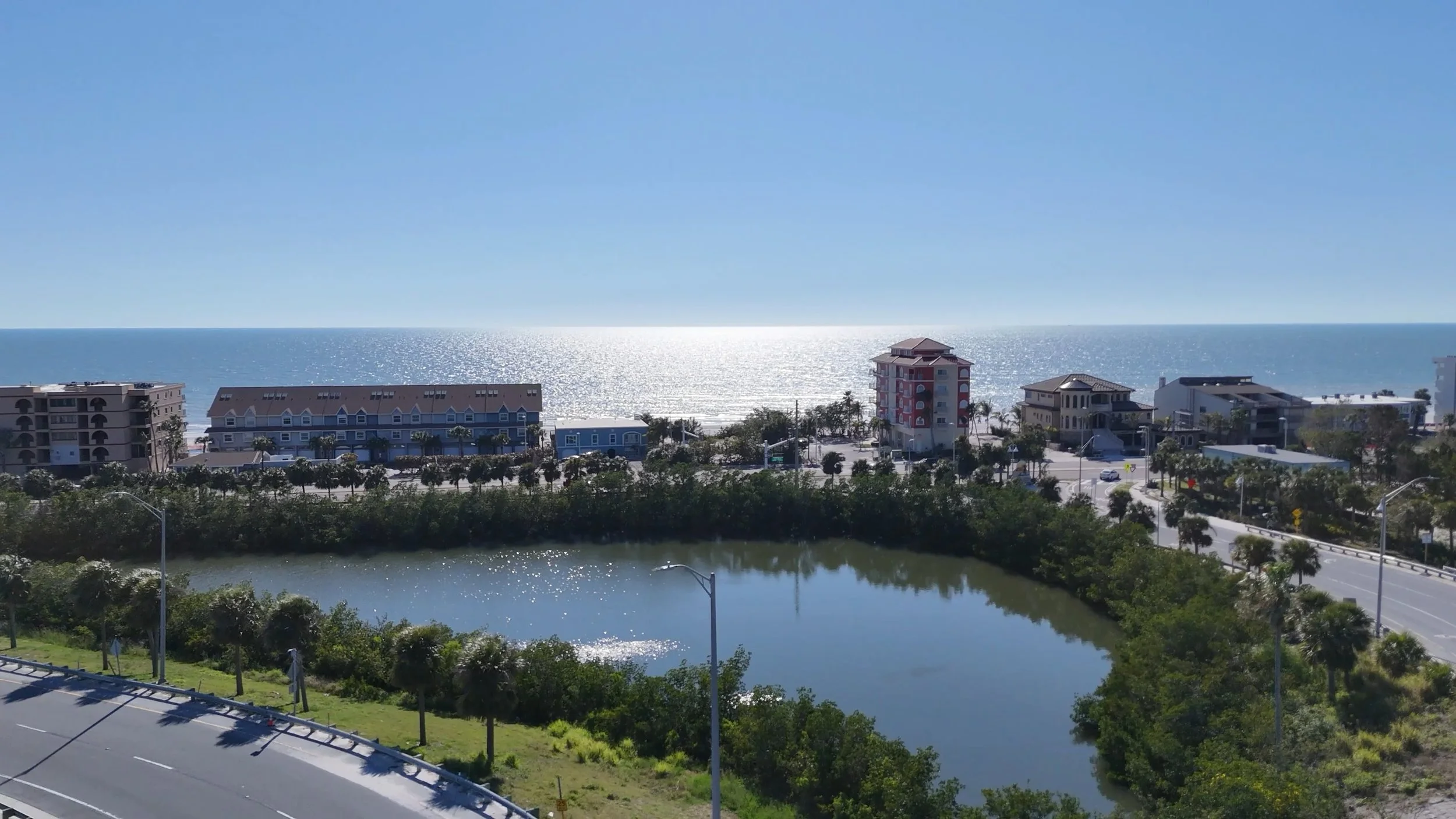
North Redington Beach is one of the smallest and most exclusive communities on the Pinellas County barrier island chain. With a population of approximately 1,000 residents, the town sits between Redington Shores to the north and Redington Beach to the south, occupying a narrow strip of Gulf-front land that is almost entirely residential in character.
The real estate market here is defined by its scarcity. Transaction volume is among the lowest in the corridor — typically fewer than ten closed sales per quarter — which means individual properties have an outsized effect on reported market statistics. Median home values sit above $1 million, with recent closed transactions ranging from the high $600s to well over $1.7 million depending on Gulf frontage, elevation, and condition.
The Tripod Key area, a canal subdivision on the northern end of the community, is a particularly sought-after address. Canal-front homes with direct boating access to the Intracoastal Waterway and Gulf of Mexico attract buyers who prioritize waterfront lifestyle over proximity to commercial amenities. Gulf Boulevard passes through the town, but there are no hotels, restaurants, or retail establishments within the community itself — access to dining and services is a short drive to neighboring Redington Beach or Madeira Beach.
With a 66% owner-occupancy rate and a median resident age of 61, North Redington Beach appeals most to established buyers making a long-term lifestyle decision rather than short-term investors seeking high rental turnover.
Key Characteristics
One of the smallest incorporated communities on the Pinellas barrier island chain
Median home values above $1 million; very thin transaction volume
Exclusively residential — no hotels, restaurants, or commercial development within town limits
Strong appeal for buyers seeking privacy, boating access, and a quiet Gulf-front lifestyle
Redington Beach Real Estate
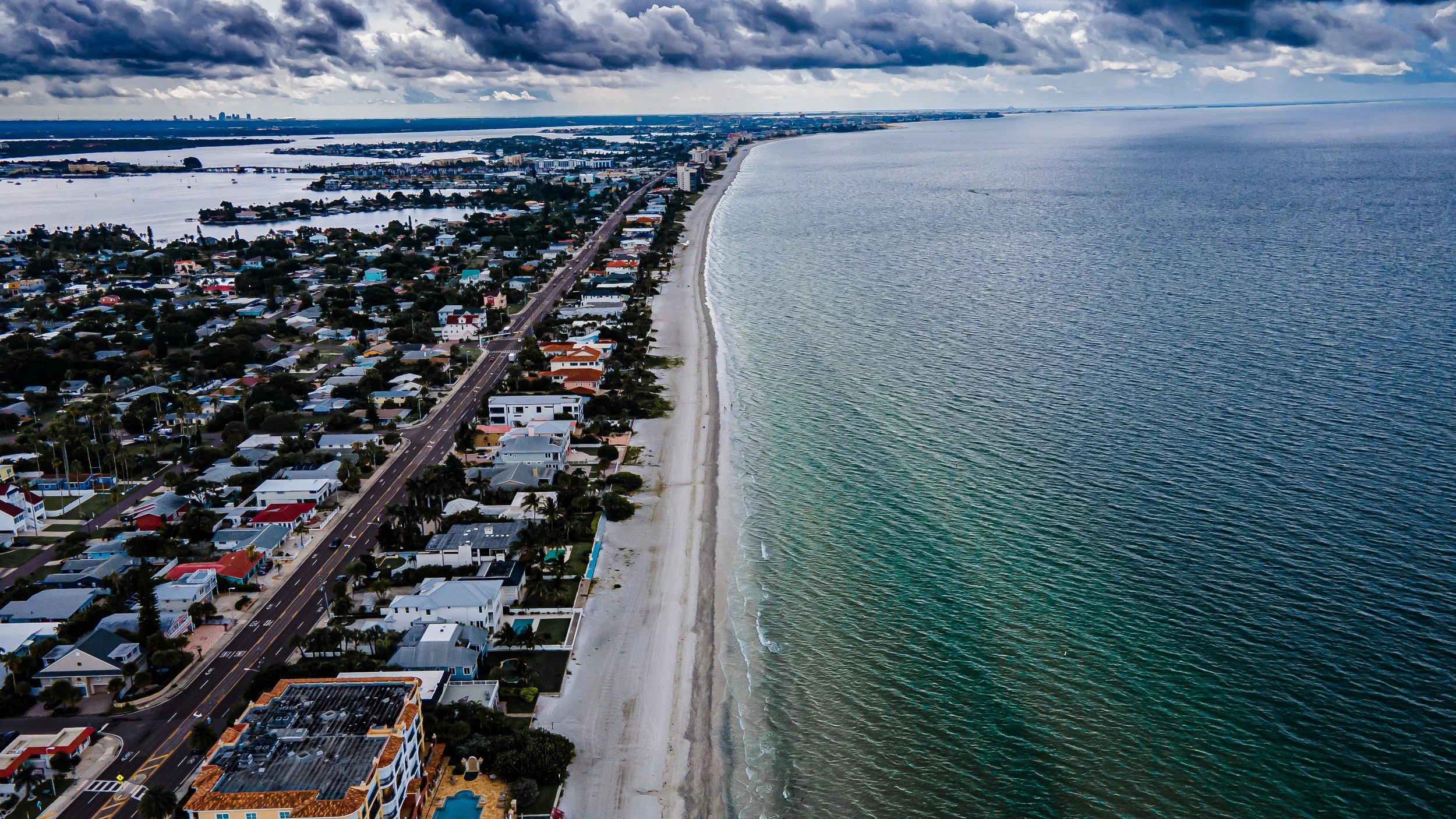
Redington Beach is a small, quiet residential community situated between North Redington Beach to the north and Indian Shores to the south. With a population of approximately 1,300, it shares the mid-county barrier island corridor's characteristic combination of Gulf-front and canal-front properties, but maintains a distinctly low-profile, neighborhood-first atmosphere.
The housing stock consists primarily of single-family homes, with a mix of vintage concrete block construction from the 1960s and 1970s alongside more recently renovated and newly built elevated structures. Median estimated home values in Redington Beach have historically tracked above the Pinellas County median, reflecting the premium buyers place on barrier island access and the limited supply of available properties in this stretch of the corridor.
Commercial activity is limited within the town itself. Residents typically access restaurants, grocery stores, and services in nearby Madeira Beach or the broader Seminole area on the mainland. The community is connected to the mainland via the Tom Stuart Causeway, which provides access to Seminole and the broader Pinellas County road network.
Buyers drawn to Redington Beach tend to be those seeking a residential beach town with Gulf access but without the tourism intensity of larger communities like Clearwater Beach or Madeira Beach. The community's small scale and owner-occupied character make it a good fit for primary residents and buyers seeking a quieter second-home environment.
Key Characteristics
Small residential barrier island community of approximately 1,300 residents
Mix of vintage single-family homes and newer elevated construction
Gulf-front and canal-front properties with Intracoastal Waterway access
Low tourism activity; appeals to buyers prioritizing residential character over resort amenities
Madeira Beach Real Estate
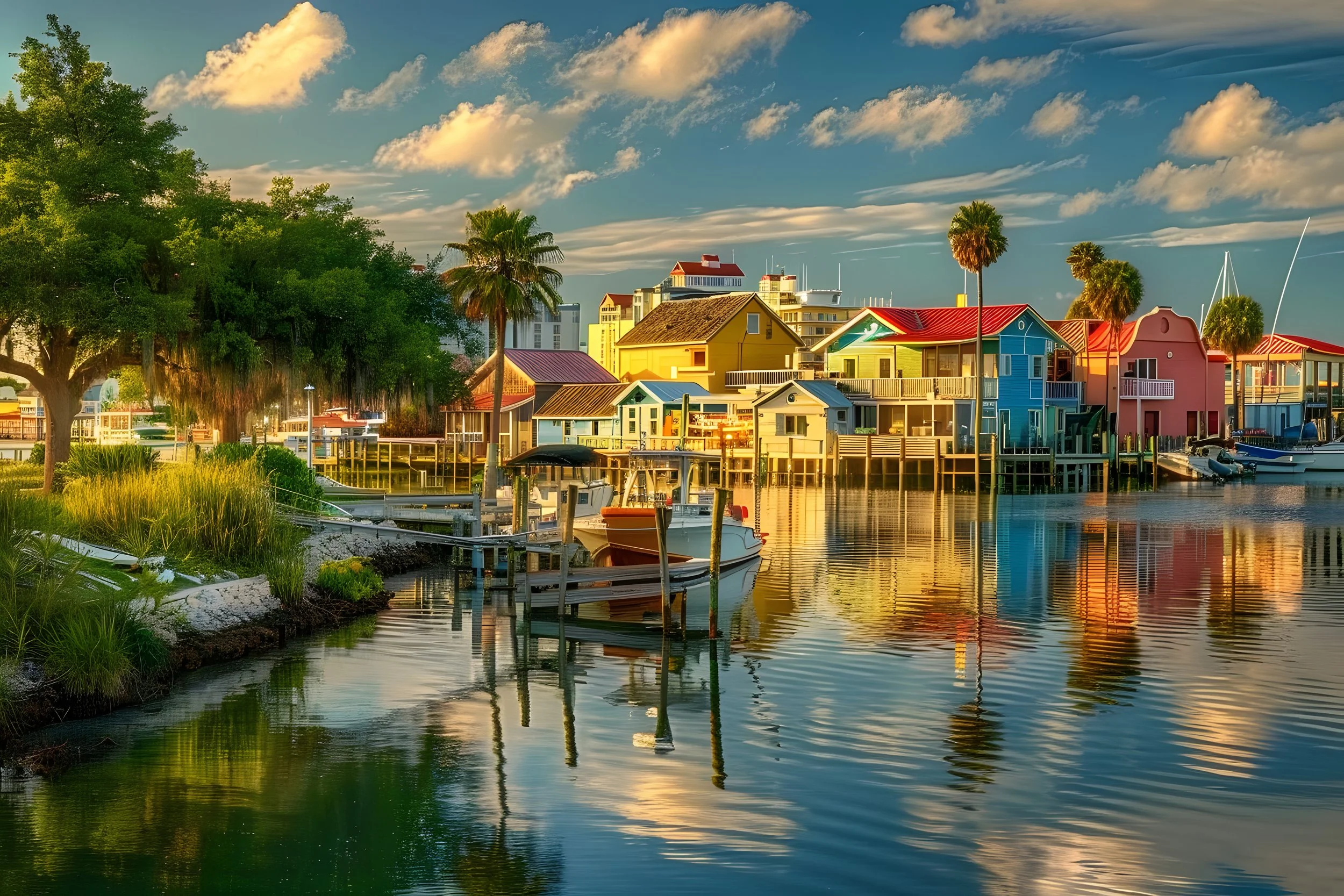
Madeira Beach blends elements of tourism activity and residential living. The area is perhaps best known for John’s Pass Village and Boardwalk, a waterfront entertainment district featuring shops, restaurants, and charter fishing operations.
The real estate market in Madeira Beach includes both condominium developments and single-family homes. Properties closer to the beach often attract second-home buyers and investors, while residential neighborhoods further inland provide housing for full-time residents.
Because of its tourism activity and waterfront amenities, Madeira Beach continues to attract buyers interested in coastal living with access to boating, fishing, and beach recreation.
Key Characteristics
• Mix of residential neighborhoods and tourism areas
• Waterfront homes along the Intracoastal Waterway
• Access to boating, marinas, and fishing charters
• John’s Pass Village and Boardwalk entertainment district
Treasure Island Real Estate
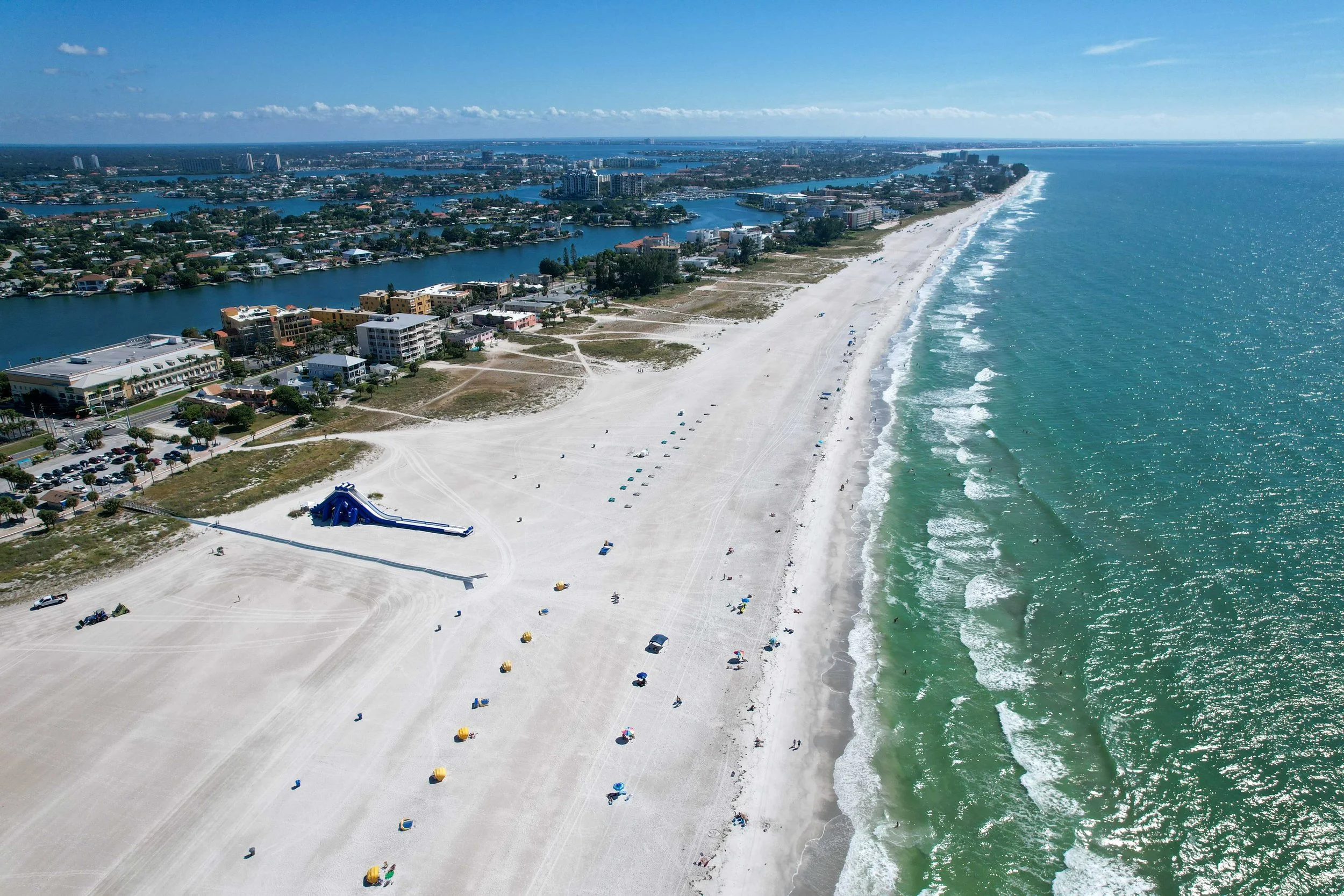
Treasure Island occupies a central position on the Pinellas County barrier island chain, sitting between Madeira Beach to the north and St. Pete Beach to the south. With a population of approximately 7,000, it is one of the larger barrier island communities in the mid-county corridor and offers a broader range of property types and neighborhood characters than its smaller neighbors.
The community is organized around several distinct residential areas. Isle of Capri and Isle of Palms feature canal-front homes with boat docks and direct Intracoastal Waterway access. Paradise Island, in the northern portion of the city, offers larger lots and a slightly quieter residential feel. Yacht Club Estates, toward the southern end, attracts buyers seeking deep-water boat slips combined with Gulf proximity. Along the western edge of the island, Treasure Island Beach provides more than four miles of Gulf-front shoreline.
The housing mix includes both single-family homes and condominium developments, though Treasure Island has historically maintained a lower density than Clearwater Beach. With a 75% owner-occupancy rate — among the highest on the barrier island chain — the community skews toward full-time and long-term residents rather than short-term visitors. The annual American Sand Sculpting Championship held on Treasure Island Beach draws visitors each fall, but the surrounding residential neighborhoods remain largely insulated from tourist activity.
Buyers exploring Treasure Island often compare it to Madeira Beach and St. Pete Beach as alternatives that offer Gulf access and established neighborhood character without the highest price points in the corridor.
Key Characteristics
Central barrier island location between Madeira Beach and St. Pete Beach
Multiple distinct neighborhoods including Isle of Capri, Isle of Palms, and Yacht Club Estates
75% owner-occupancy rate; strong full-time resident community with Gulf-front and canal-front options
Annual Sand Sculpting Championship; quieter tourist profile than northern corridor communities
St. Pete Beach Real Estate
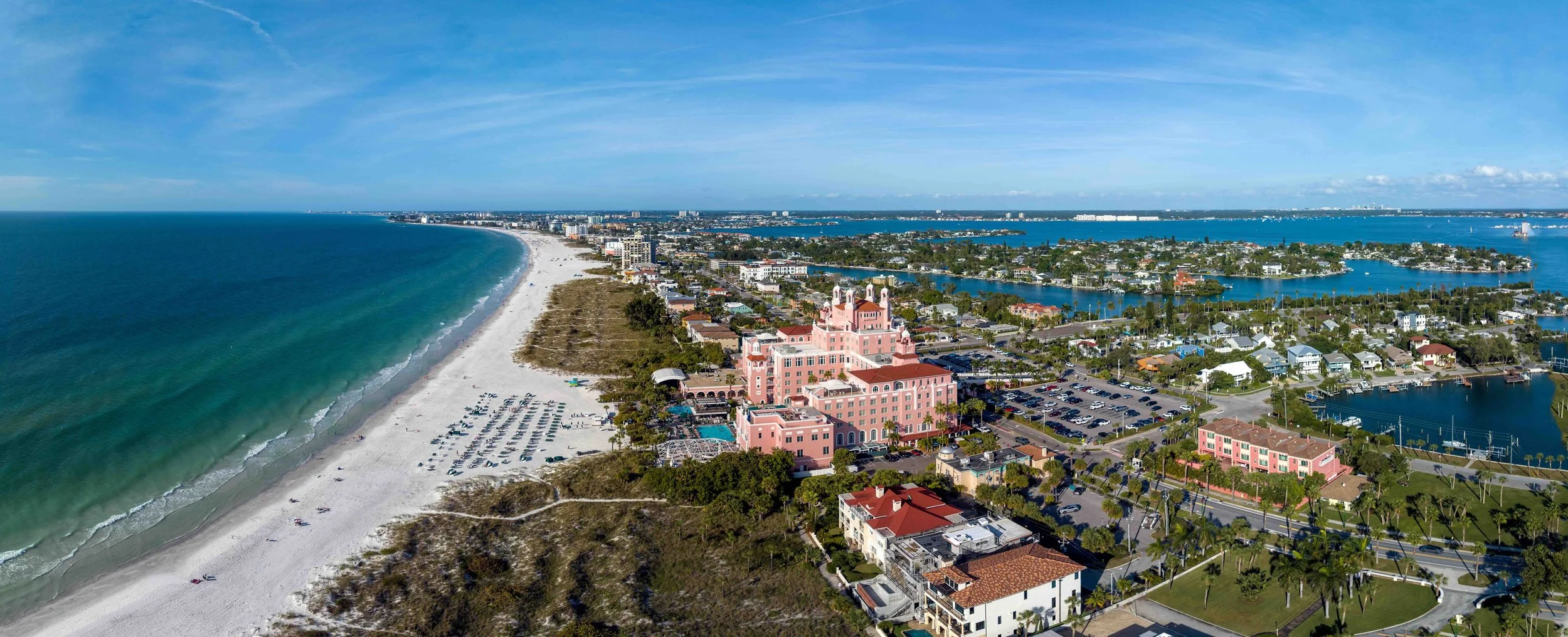
St. Pete Beach anchors the southern end of the Pinellas County barrier island chain and offers one of the most complete coastal lifestyle environments in the region. The community encompasses several distinct neighborhoods, including the historic Pass-a-Grille district at its southern tip — one of the oldest beach communities in Florida, with a walkable village of shops, restaurants, and historic cottages that predates most of the barrier island development to the north.
The real estate market in St. Pete Beach reflects its position as both a residential community and an established tourist destination. The housing mix ranges from Gulf-front condominium towers and historic beach cottages to canal-front single-family homes with Intracoastal Waterway access. The combination of established tourism infrastructure, proximity to downtown St. Petersburg on the mainland, and the distinctive character of Pass-a-Grille makes St. Pete Beach one of the more versatile communities in the corridor for buyers with varying lifestyle priorities.
Vacation rental activity is more established here than in some of the smaller mid-corridor communities, supported by consistent visitor demand and a range of property types suited to short-term rental use. Buyers evaluating investment potential often compare St. Pete Beach to Madeira Beach and Treasure Island, weighing rental demand, property price points, and community-specific rental regulations as part of their analysis.
The Don CeSar — a landmark pink resort hotel on the Gulf shore — has defined the visual identity of St. Pete Beach since its construction in 1928 and remains one of the most recognized buildings on Florida's Gulf Coast. Its presence reflects the community's long history as a destination, which underpins the sustained buyer and visitor demand that characterizes the local market.
Key Characteristics
Southernmost major barrier island community in Pinellas County with one of the longest coastal histories
Pass-a-Grille historic district offers walkable village character distinct from the rest of the corridor
Mix of Gulf-front condominiums, canal-front homes, and historic beach cottages
Strong vacation rental demand; convenient access to downtown St. Petersburg via the Pinellas Bayway
Tierra Verde
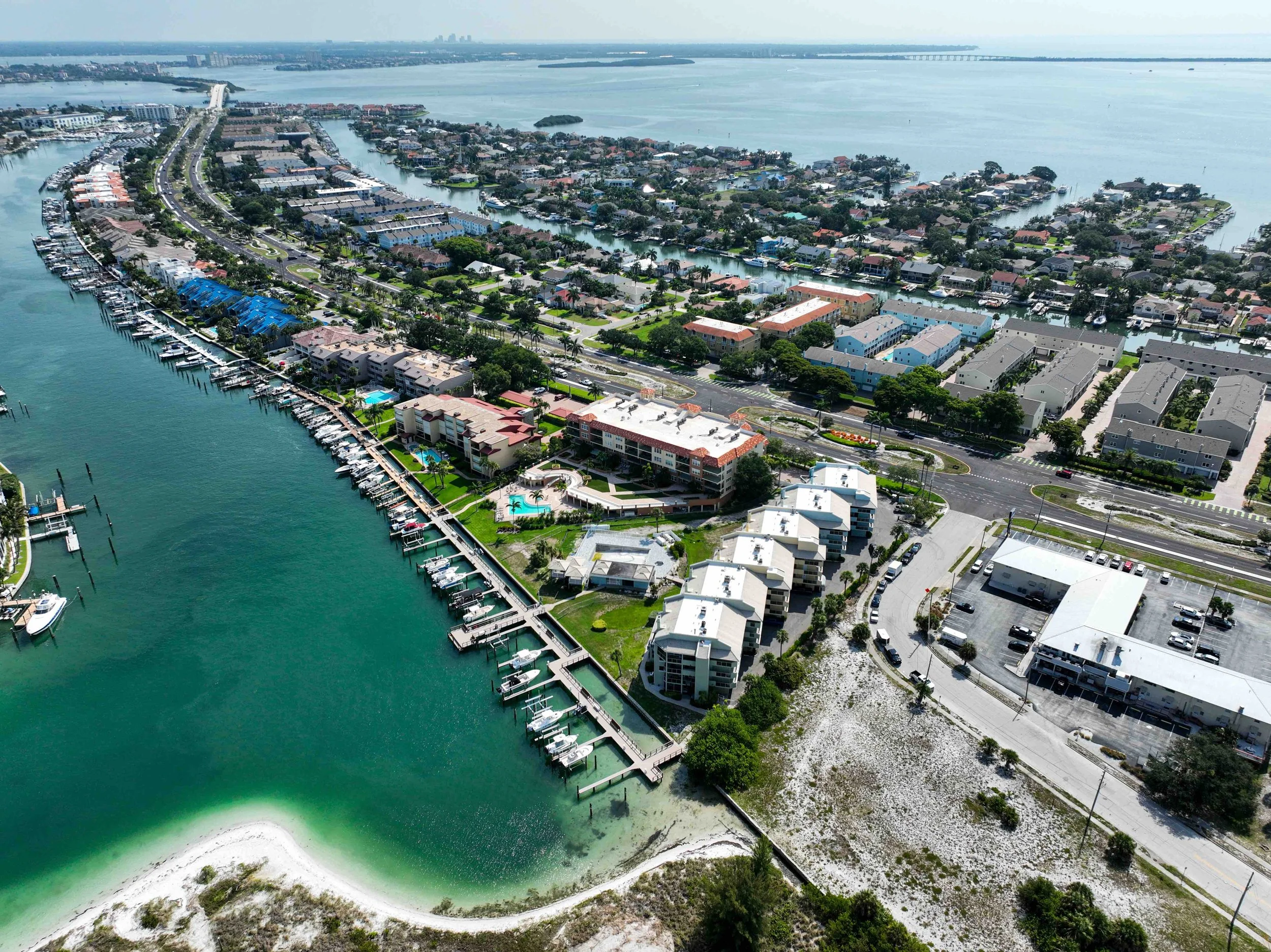
Tierra Verde is the southernmost community covered in this guide, and in several important ways the most distinctive. It is not a barrier island in the traditional sense — it sits at the southern terminus of the Pinellas Bayway (SR-679), connected to the mainland by a series of causeways rather than anchored to the Gulf-front barrier chain that runs from Clearwater Beach north to St. Pete Beach. That geographic distinction shapes its character entirely.
The number that defines Tierra Verde more than any other is 95% — the share of housing units that are owner-occupied. In a coastal Florida real estate environment where investor acquisition and short-term rental conversion have altered the fabric of nearly every beachfront community, that figure is not just unusual, it is extraordinary. The people who own homes in Tierra Verde overwhelmingly live in them. When they sell, it is because life circumstances changed, not because a spreadsheet told them to. That shows in the neighborhood: in the property maintenance standards, in the stability of community association governance, and in the kind of neighbor you get when you buy here.
The resident income profile reinforces this picture. Median household income at $148,785 is 2.1 times the Pinellas County median. Nearly 34% of adult residents hold graduate or professional degrees — almost three times the county average. Approximately 38% work from home, which gives the community a year-round, full-time residential feel that tourist-corridor communities cannot replicate regardless of price point.
What draws buyers here: Fort De Soto County Park is immediately adjacent at the island's southern end — 1,136 acres of protected Gulf shoreline, repeatedly ranked among the best beaches in the United States. For Tierra Verde residents, it is a backyard, not a destination. Shell Key Preserve, a 1,800-acre undeveloped barrier island visible from the Tierra Verde shoreline, provides kayak and paddleboard access that most waterfront communities could not manufacture at any price. The Pass-a-Grille Historic District, at the southern tip of St. Pete Beach immediately to the north, adds walkable old-Florida character within minutes by bike or boat.
The flood zone reality: Tierra Verde carries the highest flood exposure of any community in this guide. Average elevation is approximately 2 feet above sea level — the lowest in the portfolio. Most residential properties fall within FEMA Special Flood Hazard Areas (SFHA), with significant VE-zone coverage (coastal wave-action risk, the highest FEMA designation). Hurricane Helene produced storm surge inundation across parts of the community in September 2024, and properties receiving substantial-damage determinations face mandatory elevation or reconstruction to current Base Flood Elevation standards. Annual flood insurance premiums under Risk Rating 2.0 typically range from $4,000 to $18,000 or more depending on structure type, elevation, and zone. An elevation certificate is non-negotiable before any offer.
Q1 2026 market snapshot: Median sold price $812,500 on approximately five transactions per quarter (interpret with caution — any individual closing can move the needle significantly). RPR AVM median: $766,120, down 12.9% year-over-year. Active inventory: 16 months — the deepest buyer's market in this guide's coverage area. Sale-to-list ratio: 96.3%. Median days on market: 31. Correctly priced, elevated, insured properties are still moving; everything else is accumulating days.
Who buys in Tierra Verde: Established professionals and pre-retirees who want genuine island character, deep boating access, and proximity to exceptional natural amenities without the resort-corridor energy of the communities to the north. Buyers who have done the flood-zone work — elevation certificate, insurance quotes, substantial-damage review — and arrived at a number they are comfortable with long-term. This is not a community for buyers who want to defer those questions.
→ Read the Tierra Verde Community Guide for demographics, history, and lifestyle context. → Read the Tierra Verde Q1 2026 Market Report for current pricing, inventory, and post-storm due diligence detail.
Vacation Rental Investment Potential
The barrier islands of Pinellas County benefit from strong tourism demand throughout much of the year. Visitors are drawn to the region’s beaches, boating opportunities, and proximity to major Florida attractions.
Vacation rental demand tends to be strongest during winter and spring months when visitors from colder northern climates travel to Florida. Summer travel can also be active due to family vacations and beach tourism.
Many buyers researching coastal property explore whether vacation rentals are permitted in certain buildings or communities. Regulations and restrictions can vary depending on local ordinances, zoning rules, and condominium association policies.
Understanding these factors is important for buyers evaluating the potential rental use of a property.
Flood Zones and Coastal Property Considerations
Because barrier island communities sit directly along the Gulf of Mexico, many properties fall within designated flood zones established by the Federal Emergency Management Agency (FEMA).
Flood insurance requirements may depend on factors such as property elevation, building construction, and mortgage financing terms. Buyers evaluating coastal property often review elevation certificates, flood maps, and insurance options as part of their research.
Building codes in coastal areas are also designed to address hurricane resilience. Many newer structures incorporate reinforced construction methods intended to improve storm resistance.
Choosing the Right Barrier Island Community
Each barrier island community offers a slightly different lifestyle and housing mix.
| If You Want… | Consider |
|---|---|
| Walkable restaurants, nightlife, and resort-style energy with high vacation rental demand | Clearwater Beach |
| A quiet, private beachfront community with larger homes and almost no commercial activity | Belleair Beach |
| A relaxed beach town with local restaurants, a community feel, and families as neighbors | Indian Rocks Beach |
| Beachfront condos with investment and vacation rental potential in a low-key setting | Indian Shores |
| An exclusive residential address with Gulf views, million-dollar homes, and virtually no tourist traffic | N. Redington Beach |
| A small, tight-knit residential beach community where long-term owners are the norm | Redington Beach |
| A balance of residential living with marinas, John's Pass, boating, and walkable waterfront dining | Madeira Beach |
| Gulf-front lifestyle for full-time residents who want beach access without resort-corridor crowds | Treasure Island |
| A resort town with walkable dining, the Pass-a-Grille historic district, and easy access to downtown St. Pete | St. Pete Beach |
| A private island lifestyle with deep-water boating, Fort De Soto Park at your doorstep, and neighbors who actually live there full-time | Tierra Verde |
Frequently Asked Questions
-
Many buyers appreciate Indian Rocks Beach for its small-town feel, walkable layout, and beach access. Housing options include both single-family homes and smaller condominium buildings.
-
Regulations can vary depending on the property type and local ordinances. Buyers researching vacation rental use should review local rules and association policies before purchasing.
-
What is the difference between Indian Shores and Indian Rocks Beach?
-
Are flood insurance costs high on the barrier islands?
Final Thoughts
The barrier islands of Pinellas County offer a unique combination of natural beauty, coastal lifestyle, and real estate opportunities. From the vibrant energy of Clearwater Beach to the quiet residential streets of Belleair Beach, each community along the Gulf Coast offers its own appeal.
Buyers researching coastal property often spend time exploring multiple communities before deciding which location best matches their lifestyle goals.
About the Author
This guide was prepared by Darrin Jaszkowiak, a real estate broker based in Idaho with more than four decades of experience in residential real estate and investment properties. Over the course of his career he has coordinated more than two thousand real estate transactions including home sales, investment properties, and development projects.

Darrin Jaszkowiak
In addition to his brokerage work in Idaho, he owns property on Florida’s Gulf Coast and closely follows the real estate markets along the Pinellas County barrier islands.
Author’s Note: This article is provided for informational purposes only. While the author is a licensed real estate broker in Idaho, he is not currently licensed in the state of Florida. The information presented is based on publicly available data, market research, and personal experience owning property in the region.