
Indian Rocks Beach, Florida
An Old Florida fishing village that never entirely forgot what it was.
AT A GLANCE
Location Pinellas County, FL — barrier island on the Gulf of Mexico
Population Approx. 4,400 residents (U.S. Census)
Median Age 59 years
Housing Mix 65% owner-occupied / 35% renter-occupied
Character Residential beach community with Old Florida cottage character; no high-rises
Known For Original Gulf Coast fishing village origins; no-high-rise ordinance; "Tampa’s Playground" history
Nearest City Clearwater (~10 minutes north); St. Petersburg (~30 minutes south)
Nearest Airport St. Pete/Clearwater International (~20 minutes); Tampa International (~35 minutes)
Market Data See current Indian Rocks Beach Market Report →
There are beach communities that were built to be beach communities — planned, platted, and pitched to buyers from somewhere else. And then there are places like Indian Rocks Beach, which started as something genuinely functional — a fishing village on a barrier island — and kept enough of that original character to remain interesting a century later. The Old Florida cottages are still here. So is the general sense that this place has been something before it was a real estate market.
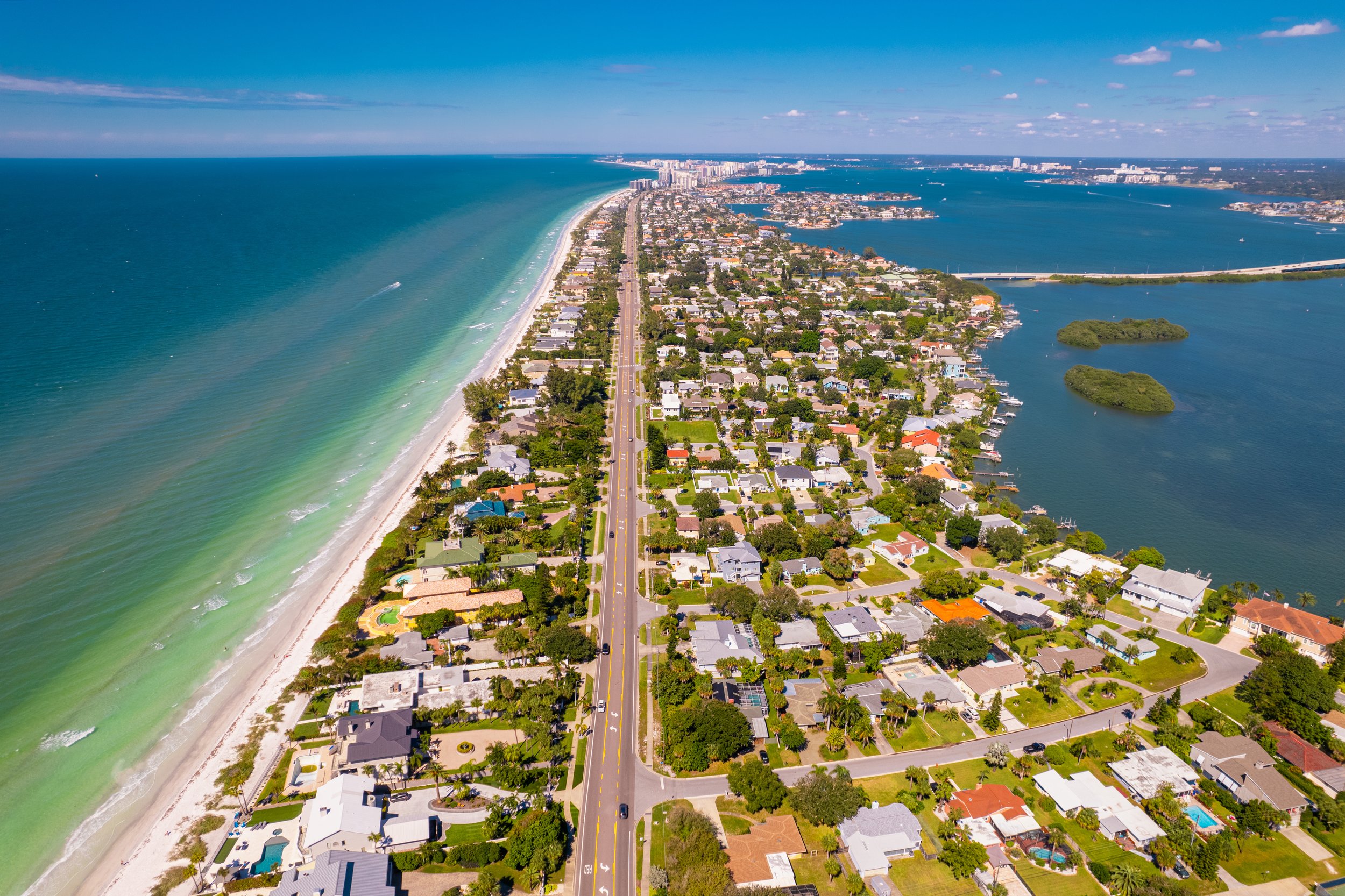
Indian Rocks Beach sits on a barrier island in Pinellas County, bordered by Belleair Beach to the north and Indian Shores to the south. Its roughly 4,400 residents live in a community where 65% of households own their homes — a relatively high rate for a Gulf barrier island, where short-term rental activity and seasonal ownership often skew the balance toward rentals. The median age is 59. The income profile is comfortably upper-middle. It is, by most measures, a well-established residential community that takes its beach seriously.
A Place Built on Springs, Fish, and Railroad Money
The Tocobaga people knew this stretch of coast long before European contact, drawn by natural freshwater springs and the abundant fishing the Gulf and Bay waters provided. One of the local legends behind the name involves a Tocobaga medicine man who used the healing springs to treat an ill chief — hence "Indian Rocks." The historical accuracy of the legend is debatable; the springs were real.
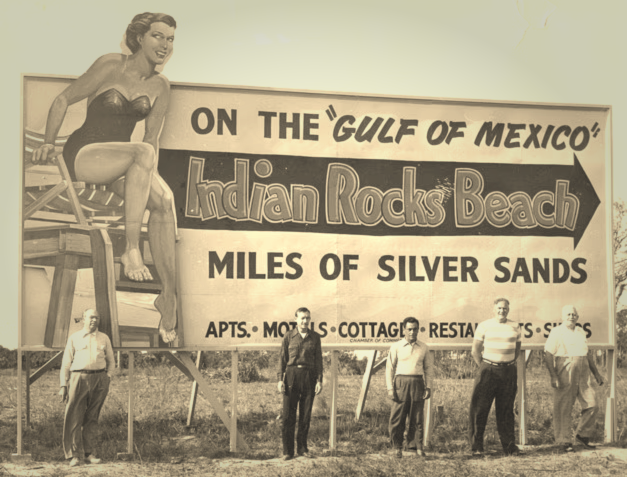
Pioneer settler Harvey K. Hendrick arrived around 1890 and later described the area as "the most beautiful place on God’s green footstool" — which either reflects genuine wonder or the particular optimism of a man who had just bought beachfront land for almost nothing. Early settlers were drawn by the springs, the agricultural potential, and the fishing. In 1914, the Tampa and Gulf Coast Railroad built a spur line from Tampa to the beach, and Indian Rocks Beach quickly became known as "Tampa’s playground" — the weekend destination for the city’s wealthy families.
The postwar years brought a new generation of buyers. The 1950s and ’60s saw the construction of what was, for a time, the longest fishing pier in Florida. The Old Florida cottages that characterize much of the community today date largely to this era — modest, colorful, single-story structures that were built for summer use and gradually became year-round homes as air conditioning made that practical.

What Life Here Looks Like
One of Indian Rocks Beach’s more consequential decisions was its no-high-rise ordinance, which has preserved the low-rise character that distinguishes it visually from Clearwater Beach to the north or the more developed sections of Madeira Beach to the south. Walking along the beach here, you see sky rather than towers. That is not accidental.
The community is genuinely eclectic. Gulf Boulevard runs the length of the island, lined with a mix of Old Florida cottages, newer beach homes, waterfront restaurants, and small shops. The pace is unhurried. Residents fish, kayak, paddle, and generally behave as though the Gulf is something to be used rather than merely looked at. The local character rewards that approach — this is not a community built for hotel guests, and it shows in the best possible way.
The demographics reflect a community of people who made a deliberate choice. The median household income sits above $100,000. Graduate and professional degree holders make up a meaningful portion of the population. The average commute to work is 29 minutes — slightly above the county average, which is the price of living on an island that requires a bridge to reach anywhere else.
Geography & Location
Indian Rocks Beach occupies a section of the Pinellas barrier island chain between Belleair Beach to the north and Indian Shores to the south. Gulf Boulevard (SR 699) is the primary north-south artery. The Intracoastal Waterway forms the eastern boundary, separating the barrier island from the mainland by a narrow channel. Clearwater is approximately 10 minutes north; Madeira Beach and its John’s Pass commercial district are roughly 15 minutes to the south. St. Pete/Clearwater International Airport is approximately 20 minutes by car.
Flood Zone & Insurance: What to Know Before You Buy
Indian Rocks Beach is a barrier island community sitting at very low elevation — much of the town is at or near sea level. Virtually all properties carry FEMA Special Flood Hazard Area (SFHA) exposure to some degree, with waterfront and canal-front lots carrying the highest risk classification. Flood insurance is required for any property with a federally backed mortgage in designated SFHA zones, and premiums for barrier island properties in Pinellas County have increased significantly since Hurricanes Helene and Milton in 2024. Elevation certificates and current insurance quotes are essential research for any buyer evaluating a specific property.
The current Indian Rocks Beach Market Report addresses active post-hurricane conditions, recent substantial-damage determinations, and their effect on the local transaction landscape. If you’re evaluating a specific property, always obtain a current elevation certificate and at least two insurance quotes before making an offer. This is not optional advice.
📊 Ready to go deeper? The Indian Rocks Beach Market Report covers current inventory, median pricing, buyer/seller market conditions, and hurricane-recovery context with data sourced directly from RPR and Pinellas County public records. Updated quarterly. → Read the Indian Rocks Beach Market Report.